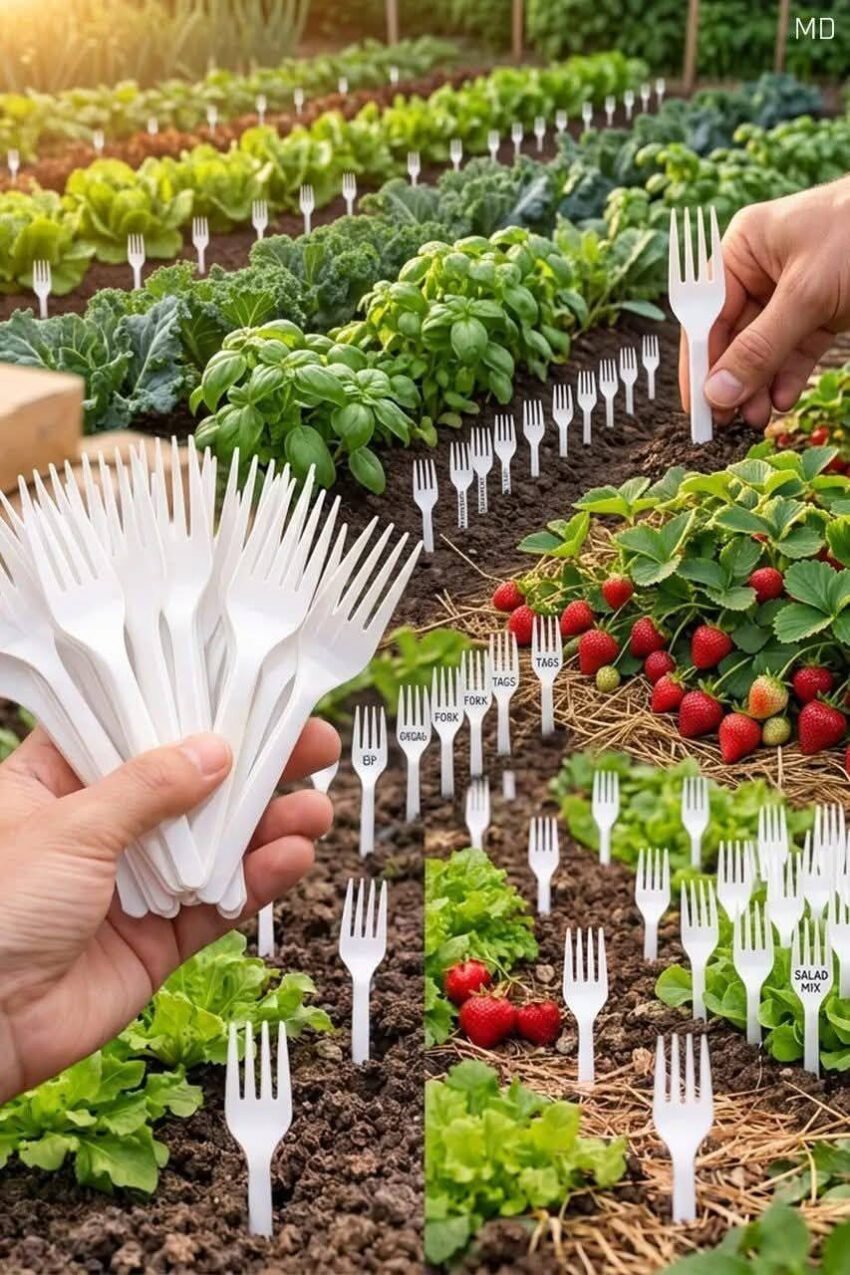
Why Some Gardeners Are Placing Plastic Forks in Their Vegetable Gardens
Gardeners are known for their creativity, especially when it comes to protecting plants from pests. One simple yet surprisingly effective method that has gained attention is placing plastic forks upright in vegetable beds. While it may look unusual at first glance, this technique serves a practical purpose and can help safeguard young plants without the use of chemicals.
The Concept Behind Using Plastic Forks
The idea is straightforward: plastic forks are inserted into the soil with their prongs facing upward, creating a spiky surface across the garden bed. This acts as a physical deterrent that makes it difficult and uncomfortable for animals to step, dig, or settle in the area.
Unlike fences or cages, forks provide a low-profile barrier that still allows sunlight, water, and airflow to reach the plants.
Common Garden Problems This Method Addresses
Preventing Digging by Pets
Domestic animals such as cats and dogs are often attracted to loose garden soil. Cats, in particular, may treat garden beds as litter boxes. The presence of upright forks discourages them from stepping into the area, reducing digging and contamination.
Deterring Small Wildlife
Small animals like squirrels and rabbits are known to dig up seeds or nibble on tender shoots. The uneven and prickly surface created by the forks can make these animals avoid the area altogether.
Protecting Seedlings from Birds
Birds may peck at freshly planted seeds or uproot young seedlings. Forks disrupt their landing space and make it harder for them to access the soil directly.
How to Use Plastic Forks in Your Garden
Materials Needed
- Plastic forks (preferably sturdy and reusable)
- A prepared garden bed or container with planted seeds or seedlings
Step-by-Step Instructions
- Insert each fork into the soil with the prongs facing upward.
- Space the forks a few inches apart, depending on the size of the area and the plants.
- Focus on areas where animals are most likely to enter or dig.
- Adjust spacing as plants grow to ensure they are not overcrowded.
Advantages of This Method
Cost-Effective
Plastic forks are inexpensive and often readily available, especially if reused from previous events or takeout meals.
Easy to Install and Remove
No tools or special skills are required. Forks can be repositioned or removed as needed.
Chemical-Free Protection
This method avoids pesticides or repellents, making it safer for the environment, beneficial insects, and edible crops.
Limitations to Consider
Not Suitable for Large Areas
Using forks across a large garden can be impractical and time-consuming.
Temporary Solution
Plastic can degrade over time due to sunlight and weather exposure, reducing effectiveness.
Limited Against Persistent Pests
Determined animals may still find ways around or between the forks, especially if spacing is too wide.
Eco-Friendly Alternatives
For gardeners who prefer sustainable options, similar results can be achieved using:
- Wooden sticks or bamboo skewers
- Small garden netting or mesh covers
- Natural deterrents such as garlic or chili sprays
These alternatives can reduce plastic use while still providing protection.
Final Thoughts
Placing plastic forks in a vegetable garden is a simple, low-cost trick that can help protect plants from common disturbances. While it is not a complete solution for all pest problems, it works well as a short-term and targeted defense, especially for seedlings and small garden beds. With minimal effort, gardeners can reduce damage and give their plants a better chance to thrive.