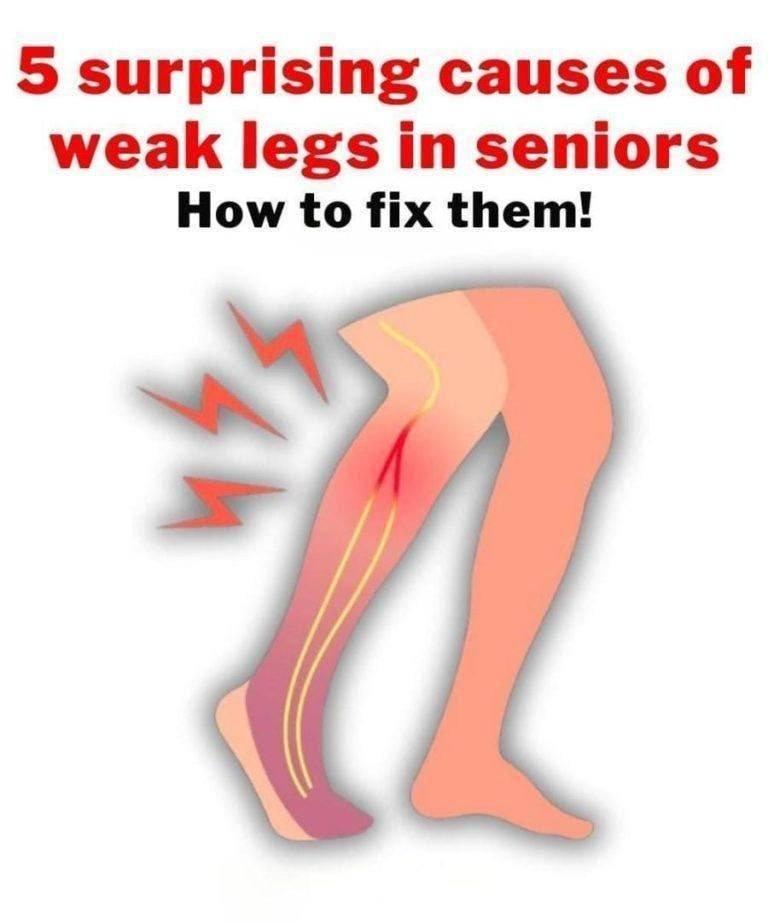
Here’s a detailed guide on 5 surprising causes of weak legs in seniors and practical ways to address them:
5 Surprising Causes of Weak Legs in Seniors — and How to Fix Them
Leg weakness in older adults can reduce mobility, increase fall risk, and impact independence. Understanding the underlying causes is key to improving strength and stability.
1. Muscle Loss (Sarcopenia)
- What it is: Age-related decline in muscle mass and strength.
- Signs: Legs feel heavy, climbing stairs is difficult, frequent tripping.
- Fix:
- Strength training: Bodyweight exercises, resistance bands, or light weights 2–3 times per week.
- Protein-rich diet: Include lean meats, eggs, dairy, beans, and nuts to support muscle maintenance.
- Vitamin D: Supports muscle function; get sunlight exposure or supplements if deficient.
2. Poor Circulation
- What it is: Reduced blood flow to the legs due to peripheral artery disease or cardiovascular issues.
- Signs: Cold feet, cramping, numbness, or slow-healing wounds.
- Fix:
- Regular walking or low-impact exercise to improve circulation.
- Compression socks if recommended by a doctor.
- Medical evaluation: Treat underlying cardiovascular conditions.
3. Nerve Problems (Neuropathy)
- What it is: Damage to peripheral nerves, often from diabetes, vitamin deficiencies, or medications.
- Signs: Tingling, numbness, burning sensations, or unsteady steps.
- Fix:
- Manage underlying conditions: Blood sugar control if diabetic.
- Vitamin B supplementation if deficient.
- Balance exercises like heel-to-toe walking or chair squats.
4. Joint Issues (Osteoarthritis)
- What it is: Degeneration of cartilage in knees, hips, or ankles causing pain and weakness.
- Signs: Stiffness, swelling, difficulty bending knees or hips.
- Fix:
- Low-impact exercise: Swimming, cycling, or yoga to strengthen muscles without straining joints.
- Physical therapy: Focused exercises for joint support.
- Pain management: Over-the-counter anti-inflammatories (under doctor guidance).
5. Sedentary Lifestyle and Deconditioning
- What it is: Reduced physical activity leads to weaker leg muscles and poor endurance.
- Signs: Difficulty standing from chairs, climbing stairs, or walking long distances.
- Fix:
- Daily movement: Short walks, stretching, and light exercises.
- Structured exercise programs for seniors, like chair aerobics or resistance training.
- Gradual progression: Increase intensity slowly to rebuild strength safely.
Additional Tips for Stronger Legs
- Maintain a balanced diet with calcium, magnesium, and vitamin D.
- Stay hydrated to prevent cramps and fatigue.
- Wear supportive shoes to prevent falls and improve stability.
- Consult a health professional for persistent weakness, pain, or sudden changes in mobility.
Key Takeaway: Weak legs in seniors often result from a combination of muscle loss, circulation issues, nerve damage, joint problems, and inactivity. Early detection, targeted exercise, and proper nutrition can restore strength and improve quality of life.
I can also create a 7-day leg-strengthening plan for seniors with simple exercises and mobility tips that are safe to do at home.
Do you want me to make that plan?