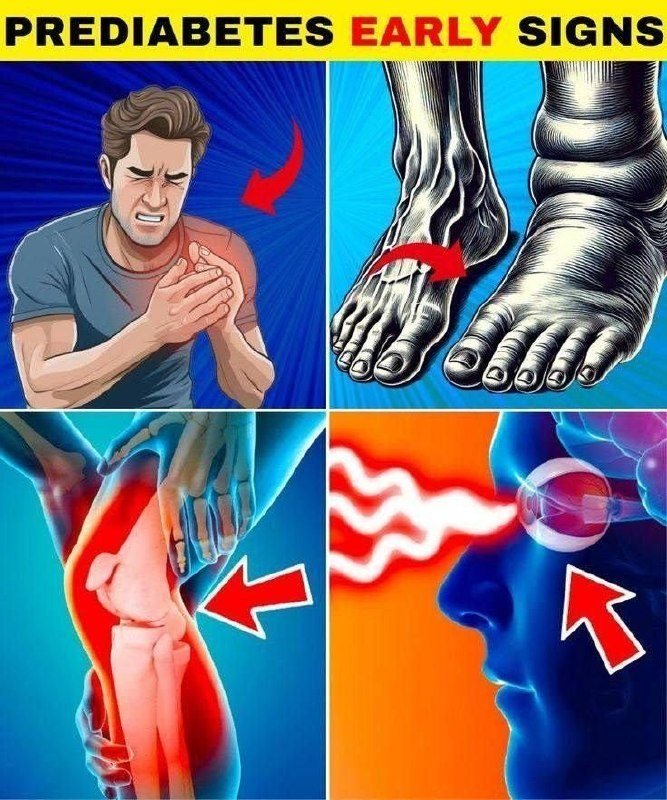
Here’s a thorough, evidence-based guide on prediabetes: what it looks like, how to detect it, and steps to control it naturally.
12 Signs You May Have Prediabetes, How to Detect It, and How to Control It
Prediabetes is a condition where blood sugar levels are higher than normal but not yet high enough for a diabetes diagnosis. Recognizing early signs and taking action can prevent progression to type 2 diabetes.
12 Signs of Prediabetes
- Increased Thirst and Frequent Urination
- Elevated blood sugar can cause excess fluid loss and dehydration.
- Fatigue or Low Energy
- High blood sugar affects how your body uses glucose for energy.
- Blurred Vision
- Sugar fluctuations can temporarily affect eye lenses and vision.
- Unexplained Weight Gain or Difficulty Losing Weight
- Insulin resistance can make weight management challenging.
- Increased Hunger
- Cells aren’t efficiently using glucose, prompting more food cravings.
- Dark Patches of Skin (Acanthosis Nigricans)
- Often appears on the neck, armpits, or groin; linked to insulin resistance.
- Slow-Healing Cuts or Wounds
- High glucose levels impair normal healing processes.
- Tingling or Numbness in Hands or Feet
- Early nerve changes may occur due to elevated blood sugar.
- Frequent Infections
- Yeast infections or urinary tract infections may occur more often.
- Mood Changes
- Irritability or anxiety can be linked to blood sugar fluctuations.
- Increased Skin Tags
- Small, benign growths often appear on the neck and armpits.
- Family History of Diabetes
- Genetics can increase susceptibility to prediabetes.
How to Detect Prediabetes
- Fasting Blood Sugar Test: 100–125 mg/dL indicates prediabetes.
- A1C Test: Measures average blood sugar over 2–3 months; 5.7–6.4% suggests prediabetes.
- Oral Glucose Tolerance Test: Blood sugar of 140–199 mg/dL after 2 hours indicates prediabetes.
How to Control or Reverse Prediabetes
1. Healthy Diet
- Focus on whole foods, vegetables, lean proteins, and high-fiber grains.
- Limit sugar, refined carbs, and processed foods.
2. Regular Exercise
- Aim for at least 150 minutes of moderate exercise per week (walking, cycling, swimming).
- Strength training helps improve insulin sensitivity.
3. Weight Management
- Losing 5–10% of body weight can significantly reduce diabetes risk.
4. Monitor Blood Sugar
- Regular checks help track progress and make lifestyle adjustments.
5. Reduce Stress
- Stress hormones can raise blood sugar; practice meditation, yoga, or deep breathing.
6. Adequate Sleep
- 7–9 hours per night supports insulin sensitivity and hormone balance.
7. Limit Alcohol and Quit Smoking
- Both increase the risk of progression from prediabetes to type 2 diabetes.
Key Takeaway: Prediabetes is reversible with lifestyle changes. Recognizing the signs early, testing, and taking action can help you prevent type 2 diabetes and improve overall health.
If you want, I can make a 7-day prediabetes-friendly meal and activity plan that’s simple to follow and designed to stabilize blood sugar naturally.
Do you want me to do that?