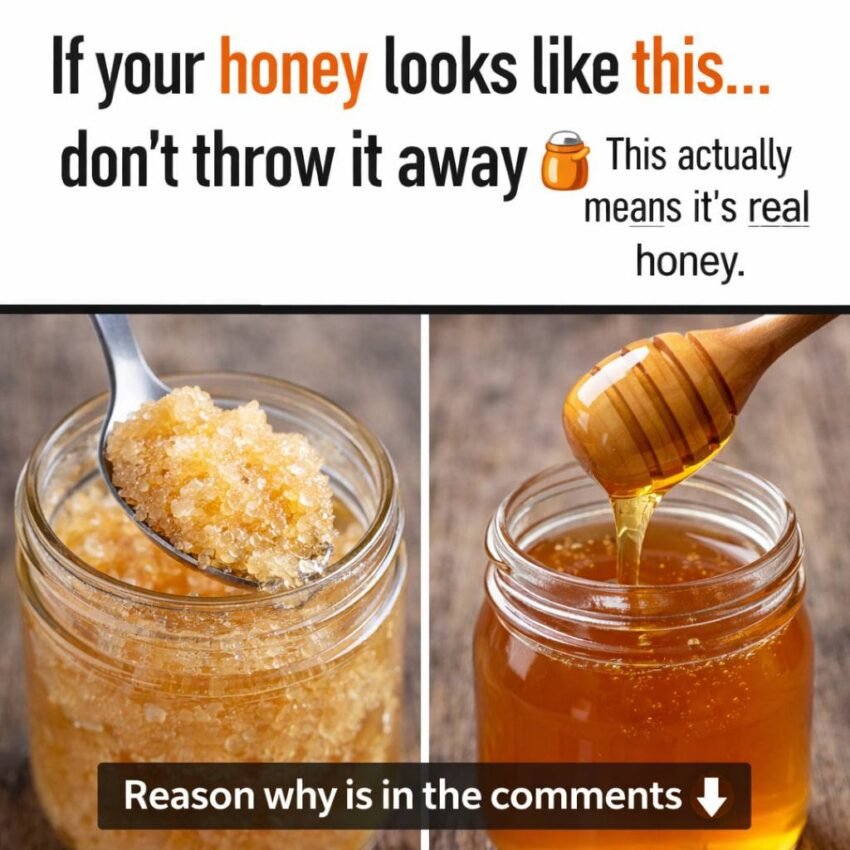
Absolutely! Honey crystallizing is completely natural and actually a good sign of quality. Here’s what’s happening and how to handle it:
Why Honey Crystallizes
-
Sugar Composition
-
Honey is mainly glucose and fructose.
-
Glucose tends to separate from water and form crystals over time.
-
Honeys with higher glucose-to-fructose ratios crystallize faster.
-
-
Temperature
-
Honey stored in cool environments (50–59°F / 10–15°C) crystallizes more quickly.
-
Warmer honey stays liquid longer.
-
-
Purity
-
Raw, unprocessed honey crystallizes naturally.
-
Commercial honeys often stay liquid longer because they are heated and filtered, removing particles that act as crystal “seeds.”
-
Why It’s a Good Thing
-
Crystallized honey is usually raw, unpasteurized, and nutrient-rich.
-
It retains enzymes, antioxidants, and pollen, which are often reduced in processed honey.
-
It’s a sign your honey is minimally processed and authentic.
How to Turn Crystallized Honey Back Into Liquid
-
Gentle Warm Water Bath
-
Place the honey jar (if glass) in a bowl of warm water (not boiling).
-
Stir occasionally until the crystals dissolve.
-
Keep temperature below 120°F / 50°C to preserve nutrients.
-
-
Avoid Microwave
-
Microwaving can destroy enzymes and antioxidants.
-
-
Storage Tip
-
Store honey at room temperature in a sealed container to slow crystallization.
-
✅ Key Insight:
Crystallization is a sign of quality, not spoilage. It’s natural, safe, and even desirable if you want raw, nutrient-rich honey.
If you want, I can make a quick guide showing the “crystallization timeline” for different honey types and how fast each type tends to crystallize naturally.
Do you want me to make that guide?