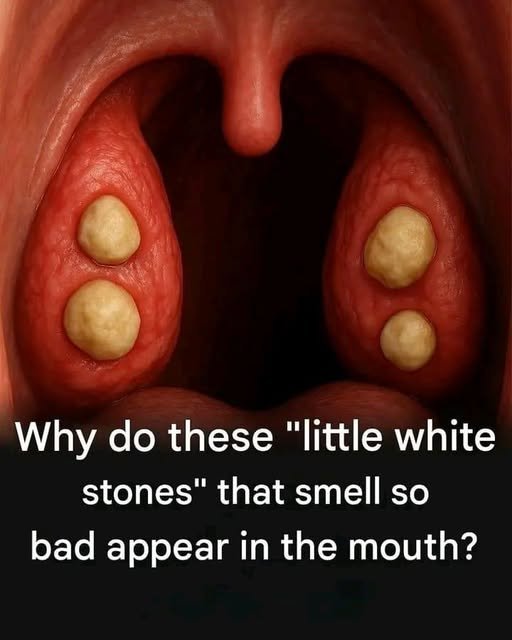
Those “white stones” are most often tonsil stones, medically called tonsilloliths.
🦷 What are tonsil stones?
Tonsil stones are small, whitish or yellowish lumps that form in the crevices (crypts) of your tonsils. They’re made of:
- Trapped food particles
- Dead cells
- Mucus
- Bacteria
Over time, this material hardens (calcifies) into stone-like bits.
👃 Why do they cause bad breath?
The bacteria inside tonsil stones produce sulfur compounds, which create a strong, foul smell—often described as rotten eggs.
🔍 Common signs
- Persistent bad breath (even with good oral hygiene)
- Feeling of something stuck in the throat
- Sore throat or irritation
- White or yellow specks on the tonsils
- Metallic or unpleasant taste
- Ear pain (referred pain)
Some people have no symptoms except bad breath.
🧬 Why do they form?
You’re more likely to get tonsil stones if you:
- Have large or deeply creased tonsils
- Get frequent throat infections
- Breathe through your mouth
- Have post-nasal drip or chronic sinus issues
- Smoke or vape
- Have poor oral hygiene
🏠 How to remove them safely
- Gargle with warm salt water
- Use a water flosser on low pressure
- Gently push with a cotton swab (be careful)
- Maintain good oral hygiene (tongue scraping helps)
⚠️ Avoid sharp objects—you can injure the tonsils.
🩺 When to see a doctor
- Stones are frequent or very large
- You have ongoing throat pain or infections
- Bad breath doesn’t improve
- Swallowing becomes painful
In severe or recurring cases, an ENT may discuss tonsillectomy.
🛑 Not to be confused with
- Oral thrush (creamy patches that don’t pop out)
- Canker sores (painful ulcers)
- Food debris that rinses away easily
Bottom line
Those “white stones” are usually tonsil stones—harmless but annoying. While not dangerous, they’re a common and overlooked cause of chronic bad breath.
If you want, I can:
- Show ways to prevent them
- Help you decide if removal at home is safe
- Explain when tonsil removal is considered
- Compare tonsil stones vs other mouth issues
Just let me know.