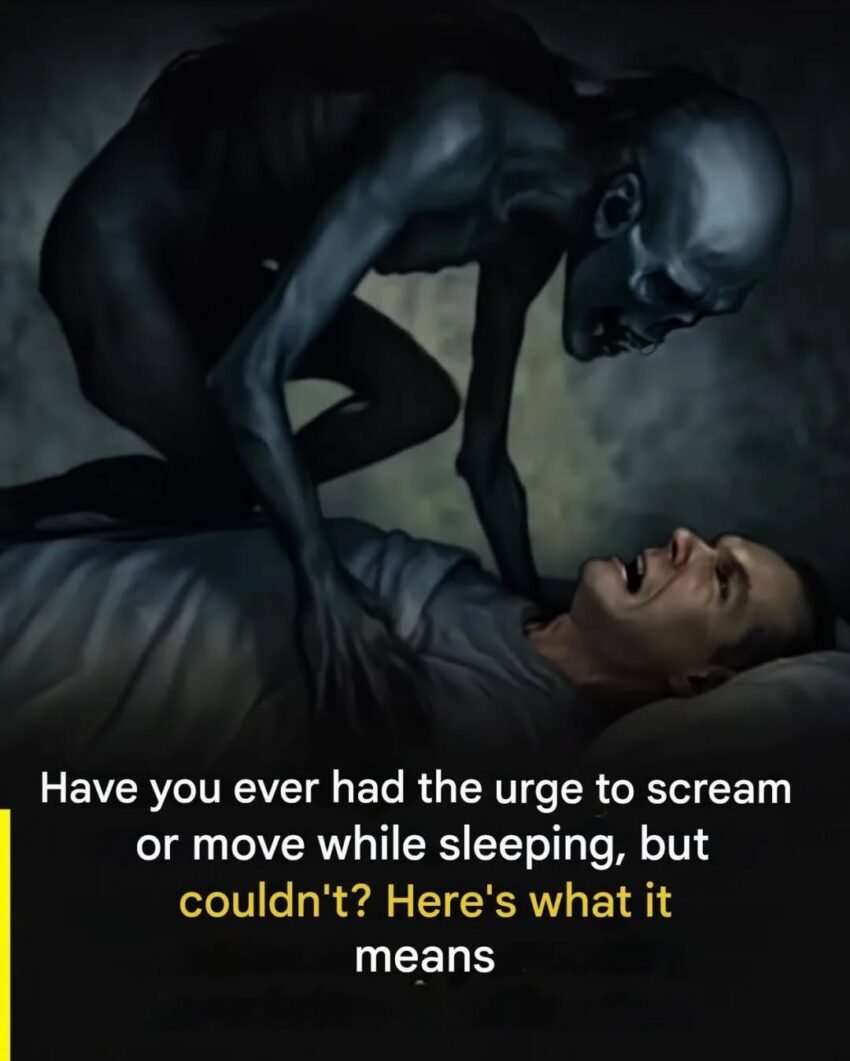
The Enigma of Nocturnal Immobility: When the Body Refuses to Obey
Waking up unable to move, speak, or react—sometimes with a crushing sense of fear—can be a deeply unsettling experience. This phenomenon is commonly known as sleep paralysis, a condition that has puzzled people for centuries and inspired myths, folklore, and fear across cultures. Today, science offers a clearer explanation.
What Is Nocturnal Immobility?
Nocturnal immobility, medically referred to as sleep paralysis, occurs when the brain wakes up before the body does. During this state, a person is conscious but temporarily unable to move or speak. Episodes typically last from a few seconds to a couple of minutes.
Sleep paralysis can occur:
- While falling asleep (hypnagogic)
- Upon waking up (hypnopompic)
Why the Body Stops Moving
During normal sleep, especially REM (rapid eye movement) sleep, the brain intentionally paralyzes most muscles to prevent us from physically acting out dreams. This protective mechanism is called REM atonia.
Sleep paralysis happens when:
- Consciousness returns
- REM muscle paralysis remains active
The result is awareness without physical control.
Common Symptoms
People experiencing nocturnal immobility may report:
- Complete inability to move or speak
- A feeling of pressure on the chest
- Difficulty breathing or the sensation of suffocation
- Intense fear or panic
- Visual, auditory, or tactile hallucinations
These hallucinations may feel extremely real and are often the most disturbing aspect of the experience.
The Role of Hallucinations
During sleep paralysis, the brain may partially remain in a dream state. This can cause:
- Shadowy figures
- Sensing a presence in the room
- Hearing voices or footsteps
- Feeling touched or restrained
Historically, these experiences were attributed to demons, spirits, or supernatural attacks. Neuroscience now explains them as dream imagery intruding into wakefulness.
Risk Factors and Triggers
Sleep paralysis is more likely to occur in individuals who:
- Experience sleep deprivation
- Have irregular sleep schedules
- Sleep on their back
- Suffer from anxiety or high stress
- Have narcolepsy or other sleep disorders
- Use alcohol or certain medications that affect sleep cycles
Is Sleep Paralysis Dangerous?
Sleep paralysis is not physically dangerous, though it can be emotionally distressing. It does not cause brain damage, breathing failure, or death. The sensation of not being able to breathe is usually due to shallow breathing during REM sleep, not actual airway obstruction.
However, frequent episodes may affect sleep quality and mental well-being.
How to Reduce or Prevent Episodes
Practical strategies include:
- Maintaining a consistent sleep schedule
- Getting adequate sleep
- Reducing stress and anxiety
- Avoiding alcohol and heavy meals before bed
- Sleeping on your side rather than your back
- Practicing relaxation techniques before sleep
In persistent or severe cases, a healthcare professional may evaluate for underlying sleep disorders.
When to Seek Medical Advice
Consult a doctor or sleep specialist if:
- Episodes occur frequently
- Sleep paralysis interferes with daily functioning
- You experience excessive daytime sleepiness
- Symptoms are accompanied by sudden muscle weakness or vivid daytime hallucinations
These may indicate an underlying condition such as narcolepsy.
The Psychological Impact
Even though sleep paralysis is benign, repeated episodes can lead to:
- Fear of sleeping
- Increased anxiety
- Sleep avoidance or insomnia
Understanding the condition often reduces fear and helps individuals regain a sense of control.
Final Thoughts
The enigma of nocturnal immobility lies at the crossroads of sleep and consciousness. What feels like a loss of control is actually a temporary mismatch between brain and body. With knowledge, healthy sleep habits, and reassurance, sleep paralysis can become less frightening and more manageable.
If you would like, I can also provide:
- Techniques to break out of an episode faster
- Cultural interpretations of sleep paralysis across history
- The difference between sleep paralysis and night terrors
- How anxiety and trauma influence sleep paralysis
Just let me know.