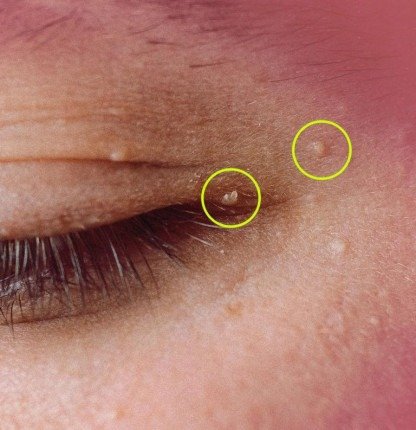
Here’s a structured, medically informed guide on milia—those tiny white bumps or “fat cysts” that appear on the skin—and safe ways to manage them.
How to Get Rid of Milia: Those Annoying Fat Cysts
Milia are small, white or yellowish bumps that typically appear around the eyes, cheeks, nose, and forehead. They form when keratin becomes trapped beneath the skin’s surface. Though harmless, they can be annoying and affect the appearance of your skin.
What Causes Milia
-
Trapped keratin: Dead skin cells accumulate under the skin instead of exfoliating naturally.
-
Skin trauma: Burns, blisters, or injuries can trigger secondary milia.
-
Use of heavy skincare products: Thick creams and ointments can block pores.
-
Certain skin conditions: Rarely, milia are linked to genetic disorders or skin diseases.
Milia are common in newborns, but adults can also develop them, often around the eyes or cheeks.
Safe Ways to Get Rid of Milia
1. Gentle Exfoliation
-
Use mild chemical exfoliants such as alpha hydroxy acids (AHAs) or beta hydroxy acids (BHAs) to help remove dead skin cells.
-
Avoid aggressive scrubs, which can irritate the skin and worsen milia.
2. Retinoid Creams
-
Topical retinoids (like adapalene or prescription tretinoin) can help promote cell turnover, gradually clearing milia.
-
Retinoids should be used carefully on sensitive areas like around the eyes, ideally under dermatologist supervision.
3. Avoid Heavy or Comedogenic Products
-
Switch to lightweight, non-comedogenic moisturizers.
-
Avoid thick creams and oil-based products that can clog pores.
4. Professional Extraction
-
Dermatologists can safely remove milia using a sterile needle or blade, preventing scarring or infection.
-
Do not attempt to pop or lance milia at home, as this can cause irritation or permanent scarring.
5. Laser or Cryotherapy (For Persistent Milia)
-
In rare or stubborn cases, laser therapy or cryotherapy may be recommended by a dermatologist.
-
Typically reserved for cosmetic concerns or clusters of milia that do not resolve with other methods.
Tips to Prevent Milia
-
Regular gentle exfoliation to prevent dead skin buildup.
-
Sun protection: Sun damage can make skin thicker and trap keratin.
-
Proper cleansing: Cleanse your face twice daily to remove dirt, oil, and makeup.
-
Avoid heavy eye creams if prone to milia around the eyes.
How Long Does Milia Take to Go Away?
-
Milia in newborns often disappear on their own within a few weeks.
-
In adults, they may persist for months unless treated.
-
With consistent skincare and/or professional removal, milia can be cleared safely.
Key Takeaways
-
Milia are harmless but stubborn white bumps caused by trapped keratin.
-
Gentle exfoliation, retinoids, and non-comedogenic products are first-line approaches.
-
Professional extraction by a dermatologist is the safest and fastest method for persistent milia.
-
Avoid squeezing or picking to prevent scarring or infection.
If you want, I can create a step-by-step at-home milia prevention and treatment routine with products and methods safe for sensitive areas like the eyes.
Do you want me to make that routine?