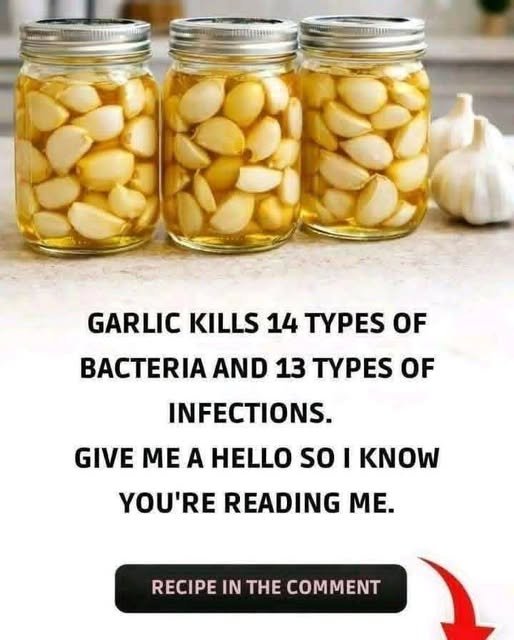
That headline has a kernel of truth — with a big asterisk.
🧄 What garlic actually does
Garlic contains allicin, a sulfur compound released when garlic is crushed or chopped. Allicin has been shown (mostly in lab studies) to have:
- Antibacterial activity
- Antiviral effects
- Antifungal properties
- Anti-inflammatory and immune-supporting effects
So yes — garlic can inhibit some microbes and help your immune system do its job.
🚫 What garlic is not
- It is not a replacement for antibiotics
- It does not reliably cure infections
- It cannot treat serious bacterial illnesses, sepsis, pneumonia, UTIs, etc.
Calling it a “natural antibiotic” is catchy… but misleading if taken literally.
Where garlic can help
- Mild upper-respiratory infections
- Supporting immunity during colds
- Gut health (prebiotic effects)
- Cardiovascular benefits (blood pressure, cholesterol)
- Anti-inflammatory support
Think of it as backup support, not frontline medicine.
How to use it for maximum benefit
- Crush or chop, then let sit 5–10 minutes (activates allicin)
- Best eaten raw or lightly cooked
- 1–2 cloves per day is common in studies
- Pair with food to avoid stomach irritation
⚠️ Safety notes
Avoid overdoing it if you:
- Take blood thinners
- Have stomach ulcers or reflux
- Are preparing for surgery
- Are sensitive to strong sulfur compounds
Bottom line
🧄 Garlic supports the immune system and has antimicrobial properties
❌ It does not “wage war” like prescription antibiotics
If you want, tell me:
- whether you’re thinking about preventing illness,
- dealing with a specific infection, or
- just curious about food-as-medicine
I can tailor the advice so it’s actually useful — not headline hype.