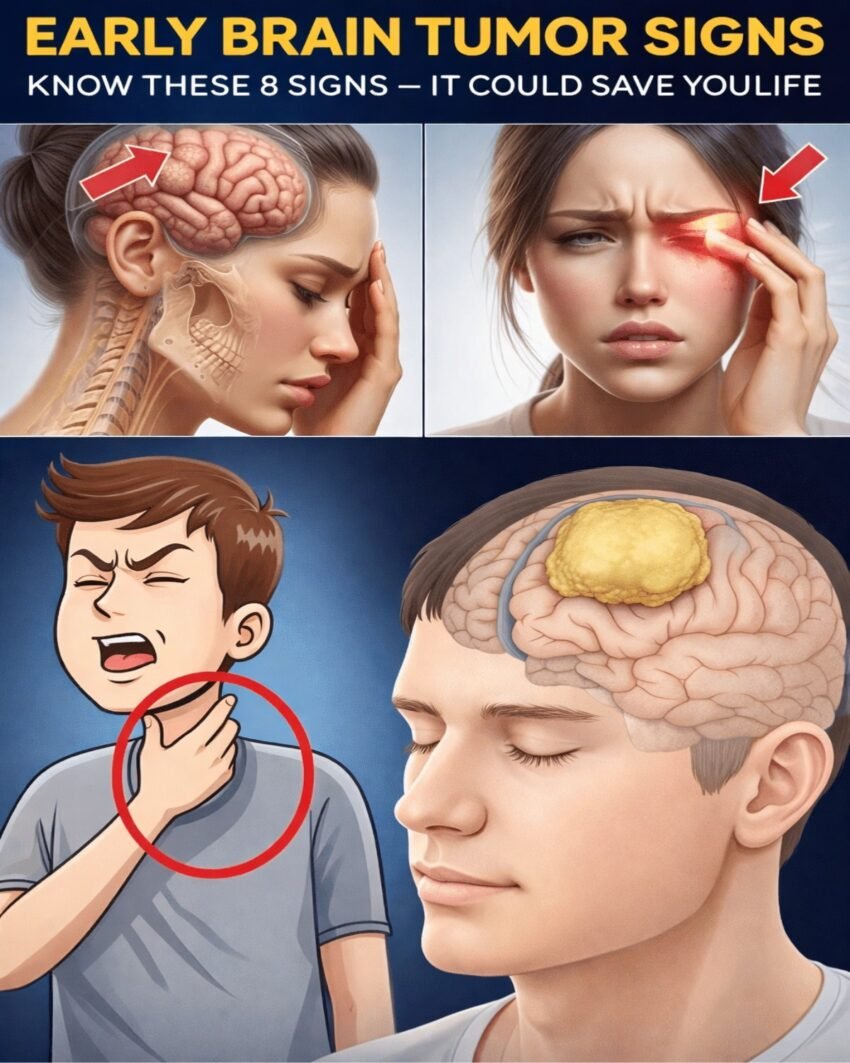
Brain tumors are relatively rare, and most headaches or neurological symptoms are caused by far less serious conditions. However, recognizing persistent or unusual changes in your body is important.
Here are 10 early warning signs that can be associated with a brain tumor. Having one of these does not mean you have a tumor — but ongoing or worsening symptoms should be evaluated by a doctor.
1. Persistent or Worsening Headaches
- Different from your usual headaches
- Worse in the morning
- Increase with coughing, bending, or straining
- Not relieved by typical medications
2. Seizures (Especially New-Onset)
A first-time seizure in an adult is a major red flag and requires urgent medical evaluation.
3. Vision Problems
- Blurred or double vision
- Loss of peripheral (side) vision
- Seeing flashing lights
Tumors near the optic nerves or occipital lobe may cause these changes.
4. Personality or Behavior Changes
- Increased irritability
- Depression or mood swings
- Poor judgment
- Sudden apathy
These are sometimes seen with tumors in the frontal lobe.
5. Memory Problems
- Difficulty remembering recent events
- Confusion
- Trouble concentrating
6. Weakness or Numbness
- One-sided body weakness
- Facial drooping
- Numbness in an arm or leg
7. Speech Difficulties
- Slurred speech
- Trouble finding words
- Difficulty understanding language
8. Balance and Coordination Problems
- Frequent falls
- Dizziness
- Trouble walking straight
Tumors affecting the cerebellum may cause this.
9. Nausea and Vomiting (Unexplained)
- Especially worse in the morning
- Not linked to stomach illness
This can be related to increased pressure inside the skull.
10. Hearing Problems
- Hearing loss
- Ringing in the ears
- Problems with balance
Some tumors such as acoustic neuroma (also called vestibular schwannoma) can affect hearing and balance.
When to See a Doctor
Seek immediate medical care if you experience:
- A first seizure
- Sudden weakness or paralysis
- Severe, sudden headache
- Sudden confusion or speech difficulty
Important Reminder
Most of these symptoms are far more commonly caused by non-cancerous conditions like migraines, infections, stress, or medication effects. Brain tumors are uncommon, but early diagnosis improves outcomes.
If you’d like, I can also explain:
- How brain tumors are diagnosed
- Who is most at risk
- Differences between benign and malignant brain tumors
- Survival rates and treatment options