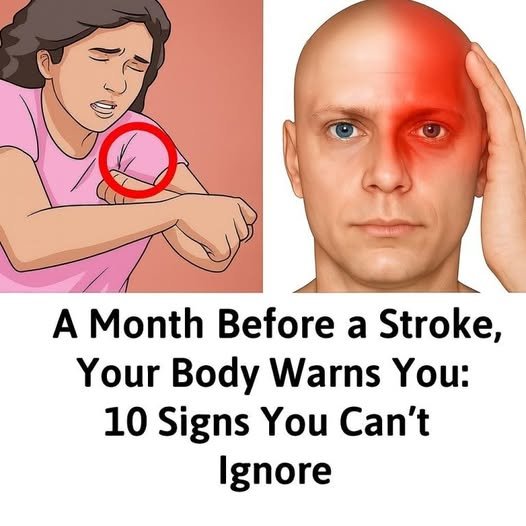
That headline gets shared a lot — and it’s partly misleading, so let’s clear it up without panic.
The truth first
👉 There is no reliable list of “10 warning signs” that predict a stroke a month in advance.
Most strokes do not give clear early warnings weeks ahead.
What can happen, though, is that some people experience transient ischemic attacks (TIAs) — often called mini-strokes — days or weeks before a major stroke. These are real medical emergencies.
Real warning signs that matter (and should never be ignored)
🚨 Stroke or TIA symptoms (sudden onset)
Remember FAST:
- Face drooping (one side)
- Arm weakness or numbness
- Speech slurred, hard to find words, or confused
- Time to call emergency services immediately
Other serious signs:
- Sudden numbness or weakness (especially on one side)
- Sudden vision problems (one or both eyes)
- Sudden dizziness, loss of balance, or coordination
- Sudden severe headache with no known cause
- Trouble understanding speech
- Confusion or memory loss that appears abruptly
⚠️ Even if symptoms disappear after minutes, it can be a TIA — and the stroke risk is highest in the next days.
Symptoms often wrongly advertised as “1 month before a stroke”
These do not reliably predict a stroke on their own:
- Fatigue
- Headaches
- Neck pain
- Anxiety
- Insomnia
- General weakness
- Mood changes
They’re common and nonspecific — most people with these never have a stroke.
Who should be extra cautious
Higher risk if you have:
- High blood pressure
- Diabetes
- High cholesterol
- Smoking history
- Atrial fibrillation
- Prior TIA or stroke
- Family history of stroke
Bottom line (important)
- Strokes are usually sudden
- TIAs are real warning shots
- Any sudden neurological symptom = emergency
- Don’t wait to “see if it passes”
If this question connects to something you or someone near you is experiencing, tell me what’s going on and I’ll help you think through the urgency calmly and clearly.