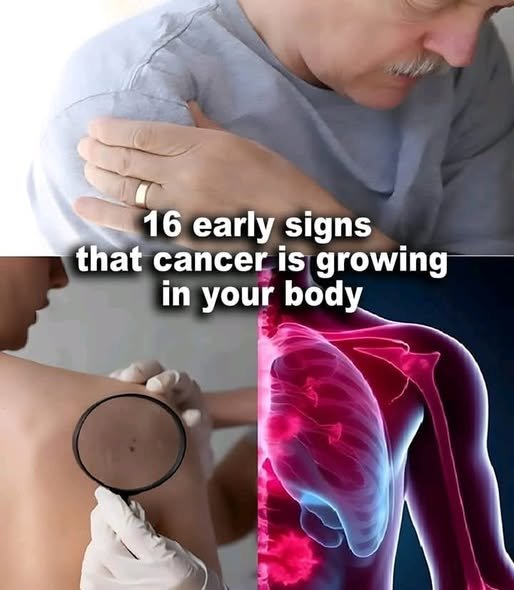
16 Early Signs That Cancer May Be Developing in the Body
Cancer can develop silently, and many early symptoms are subtle or easily mistaken for less serious conditions. Having one or more of these signs does not automatically mean you have cancer, but persistent or unexplained symptoms should be evaluated by a healthcare professional.
1. Unexplained Weight Loss
Losing 10 pounds or more without trying may be an early sign of cancers such as pancreatic, stomach, esophageal, or lung cancer.
2. Persistent Fatigue
Extreme tiredness that does not improve with rest can be associated with leukemia, colon cancer, or stomach cancer.
3. Fever Without Infection
Frequent or unexplained fevers may be linked to blood cancers such as leukemia or lymphoma.
4. Persistent Pain
Long-lasting pain without a clear cause may be associated with bone cancer, brain tumors, or other internal cancers.
5. Changes in Skin
Watch for:
-
New moles or changes in existing moles
-
Sores that do not heal
-
Yellowing of skin or eyes (possible liver involvement)
-
Darkening or redness of skin
6. Changes in Bowel Habits
Ongoing diarrhea, constipation, or narrowing of stool may signal colorectal cancer.
7. Blood in Stool or Urine
Blood in stool can be linked to colon cancer.
Blood in urine may indicate bladder or kidney cancer.
8. Persistent Cough or Hoarseness
A cough that lasts more than three weeks or coughing up blood may be associated with lung cancer.
9. Difficulty Swallowing
Ongoing trouble swallowing may be linked to throat or esophageal cancer.
10. Unusual Bleeding
Examples include:
-
Abnormal vaginal bleeding
-
Bleeding between periods
-
Nipple discharge
-
Coughing up blood
11. Lumps or Thickening
A new lump in the breast, testicles, neck, underarm, or elsewhere should be checked promptly.
12. Indigestion or Persistent Heartburn
Chronic digestive discomfort can sometimes signal stomach or esophageal cancer.
13. Mouth Sores That Do Not Heal
White or red patches in the mouth or persistent sores may be linked to oral cancer.
14. Swollen Lymph Nodes
Enlarged lymph nodes that do not shrink after a few weeks may indicate lymphoma or other cancers.
15. Persistent Bloating
Ongoing bloating, especially in women, may be associated with ovarian cancer.
16. Changes in Urination
Frequent, painful, or difficult urination can sometimes signal prostate or bladder cancer.
Important Reminder
Most of these symptoms are far more commonly caused by non-cancerous conditions. However, you should seek medical advice if symptoms:
-
Last more than 2–3 weeks
-
Worsen over time
-
Are unusual for you
-
Occur together
Early detection significantly improves treatment outcomes. Regular screenings (such as mammograms, colonoscopies, Pap smears, and prostate exams) are essential based on age and risk factors.
If you would like, I can also provide:
-
Cancer warning signs specific to men
-
Cancer warning signs specific to women
-
Early signs of specific cancers (breast, colon, lung, etc.)
-
Recommended screening guidelines by age