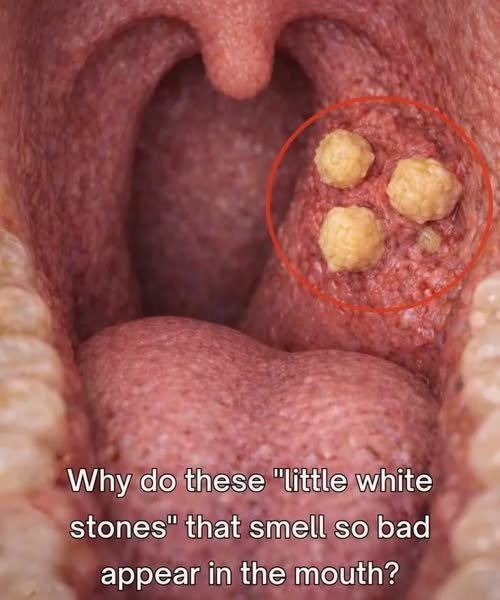
What Are Those Small White Stones in Your Throat That Cause Bad Breath?
If you’ve ever noticed small white or yellowish lumps in the back of your throat—sometimes accompanied by persistent bad breath—you may be dealing with tonsil stones, medically known as tonsilloliths. These are common, usually harmless, but often uncomfortable and embarrassing.
What Are Tonsil Stones?
Tonsil stones are small, hardened deposits that form in the crevices (crypts) of the tonsils. They are made of trapped debris such as:
-
Dead cells
-
Food particles
-
Mucus
-
Bacteria
Over time, this material calcifies, forming stone-like structures.
Why Do Tonsil Stones Cause Bad Breath?
The bacteria trapped in tonsil stones produce volatile sulfur compounds, the same chemicals responsible for foul odors.
Key reasons for odor
-
Anaerobic bacteria thrive in tonsil crypts
-
Decomposing organic material releases sulfur gases
-
Stones may go unnoticed until smell or taste becomes obvious
Common Signs and Symptoms
Not everyone experiences symptoms, but common ones include:
-
Persistent bad breath despite good oral hygiene
-
White or yellow lumps at the back of the throat
-
A foul taste in the mouth
-
Throat irritation or discomfort
-
Difficulty swallowing in severe cases
-
Ear pain due to shared nerve pathways
Who Is More Likely to Get Tonsil Stones?
Tonsil stones are more common in people who:
-
Have large or deeply creviced tonsils
-
Experience frequent throat infections
-
Suffer from postnasal drip or chronic sinus issues
-
Breathe through the mouth
-
Have poor oral hygiene
Are Tonsil Stones Dangerous?
Tonsil stones are generally not dangerous and are not cancerous. However, large or recurrent stones can cause:
-
Chronic throat irritation
-
Inflammation of the tonsils
-
Ongoing bad breath affecting quality of life
How to Remove Tonsil Stones Safely
Small tonsil stones often fall out on their own. For persistent ones, safe methods include:
-
Gargling with warm salt water
-
Using a water flosser on a low setting
-
Gentle removal with a cotton swab
Avoid sharp objects, as tonsil tissue is delicate and prone to bleeding.
How to Prevent Tonsil Stones
Preventive strategies include:
-
Brushing teeth and tongue twice daily
-
Flossing regularly
-
Staying well hydrated
-
Treating nasal allergies and sinus infections
-
Gargling after meals
When to See a Doctor
Seek medical advice if:
-
Stones are large, painful, or bleeding
-
You experience frequent infections
-
Bad breath persists despite treatment
-
Swallowing becomes difficult
In severe or recurring cases, a doctor may recommend medical management or, rarely, tonsil removal.
Conclusion
Small white stones in the throat are usually tonsil stones—common, manageable, and often the hidden cause of stubborn bad breath. With proper oral hygiene and preventive care, most people can reduce or eliminate the problem.
If you’d like, I can:
-
Rewrite this for social media or a health blog
-
Add medical references
-
Create a short Q&A or infographic version
-
Adapt it for video narration
Just tell me what you need.