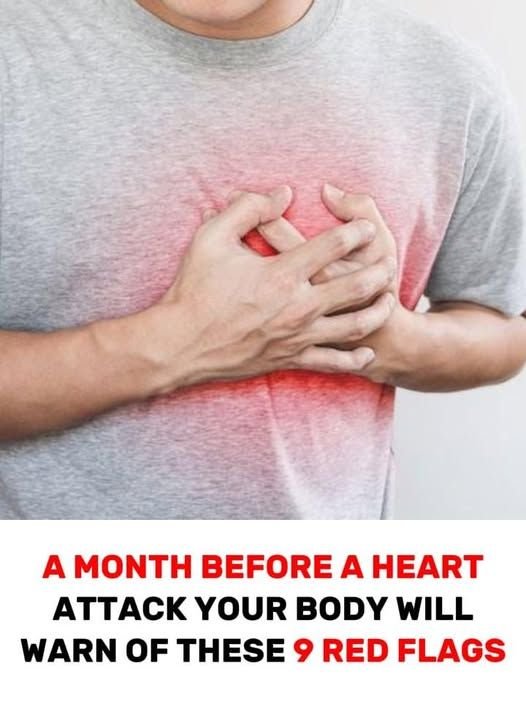
That headline is misleading and dangerous if taken literally. Your body does not reliably give a 1-month warning before a heart attack. Some people notice symptoms beforehand — many do not — and waiting for a checklist has cost lives.
Here’s the accurate, medically grounded version.
The truth first
- About half of heart attacks happen with little or no warning
- Symptoms can appear days, weeks, or minutes before — or not at all
- “6 symptoms one month before” is not how heart attacks work
That said, some people do experience early warning signs. They are inconsistent, subtle, and often dismissed.
Symptoms that may appear before a heart attack
These are possible signals, not guarantees:
1. Chest discomfort (not always pain)
- Pressure, tightness, fullness, squeezing
- Can come and go
- May be mistaken for indigestion or muscle strain
2. Unusual fatigue
- Sudden, extreme tiredness without explanation
- More common in women
- Especially concerning if it’s new and persistent
3. Shortness of breath
- During light activity or at rest
- May happen with or without chest discomfort
4. Sleep disturbances
- Insomnia, frequent waking, unexplained restlessness
- Nonspecific but reported in some cases
5. Anxiety or a sense of doom
- Sudden, intense, unexplained anxiety
- Can occur due to stress hormone release
6. Pain outside the chest
- Jaw, neck, shoulder, back, or left arm
- Can be mild, intermittent, or aching
What this list does NOT mean
- These symptoms do not predict timing
- Having them does not mean a heart attack is coming
- Lacking them does not mean you’re safe
Heart attacks often strike without advance notice.
When to seek help immediately
Call emergency services right away if you have:
- Chest pressure or pain lasting more than a few minutes
- Chest discomfort plus shortness of breath, nausea, sweating, or lightheadedness
- Symptoms that are new, worsening, or unexplained
Do not wait to see if they pass. Minutes matter.
What actually prevents heart attacks
Not symptom-watching — risk management:
- Blood pressure control
- Cholesterol management
- Blood sugar control
- Not smoking
- Regular medical follow-up
Bottom line
The idea that “your body will warn you one month before” is false reassurance. Some people get signals, many don’t, and none are precise.
The safest rule is simple:
New, unexplained chest or breathing symptoms = get checked. Immediately.
If you want, I can:
- Explain how heart attack symptoms differ in women vs men
- Break down which symptoms people most commonly ignore
- Help you understand your personal risk factors
Just tell me what angle you want.