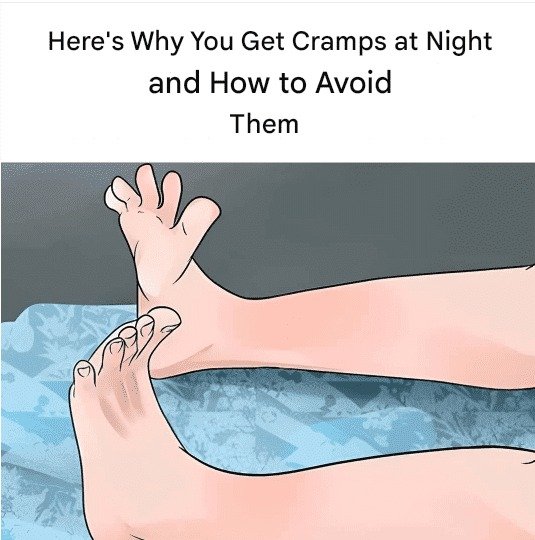
Here’s a full, structured article on “This Is Why We Get Cramps at Night” with proper headings:
This Is Why We Get Cramps at Night
Introduction
Waking up in the middle of the night with a sudden leg cramp can be painful and frustrating. Nighttime muscle cramps are common, affecting both adults and older individuals. Understanding why they happen can help prevent them and reduce discomfort.
What Causes Nighttime Cramps?
1. Dehydration
- Explanation: Muscles require adequate fluids to function properly.
- How it Happens: Low water intake during the day or excessive sweating can lead to fluid imbalance, triggering cramps at night.
- Tip: Drink enough water throughout the day, especially if you exercise or live in a hot climate.
2. Electrolyte Imbalance
- Explanation: Electrolytes such as potassium, calcium, and magnesium help muscles contract and relax.
- How it Happens: A deficiency in these minerals can cause involuntary muscle contractions.
- Tip: Include electrolyte-rich foods in your diet like bananas, spinach, nuts, and dairy, or consider a supplement if recommended by a doctor.
3. Muscle Fatigue or Overuse
- Explanation: Overworking your muscles during the day can lead to cramps at night.
- How it Happens: Prolonged standing, intense exercise, or repetitive motion can strain muscles, especially calves.
- Tip: Stretch and massage muscles before bedtime to relax them.
4. Poor Circulation
- Explanation: Reduced blood flow to muscles can trigger cramps during sleep.
- How it Happens: Sitting or lying in awkward positions can restrict circulation.
- Tip: Avoid crossing legs for long periods and try sleeping with legs slightly elevated if circulation is an issue.
5. Certain Medications
- Explanation: Some medications, like diuretics, statins, or asthma drugs, may cause muscle cramps as a side effect.
- Tip: If cramps are frequent, consult your doctor about adjusting medications or dosages.
How to Prevent Nighttime Cramps
- Stay Hydrated: Drink water regularly throughout the day.
- Stretch Before Bed: Focus on calves, thighs, and feet to relax muscles.
- Maintain Electrolytes: Eat a balanced diet rich in potassium, calcium, and magnesium.
- Wear Comfortable Footwear: Avoid high heels or shoes that strain calf muscles.
- Adjust Sleep Position: Avoid positions that strain your legs; gently stretch if you wake up with cramps.
- Massage or Heat: Light massage or a warm compress before bed can help relax tight muscles.
When to See a Doctor
Seek medical advice if:
- Cramps are severe or frequent
- They are accompanied by swelling, redness, or numbness
- You have underlying nerve or circulatory issues
These could indicate more serious conditions like peripheral artery disease, nerve disorders, or electrolyte imbalances that require treatment.
Conclusion
Nighttime cramps are usually caused by dehydration, electrolyte imbalance, muscle fatigue, poor circulation, or medications. Simple lifestyle adjustments like stretching, staying hydrated, and maintaining a nutrient-rich diet can greatly reduce the frequency and severity of these cramps, helping you sleep peacefully through the night.
If you want, I can make a quick 1-minute bedtime stretching routine specifically designed to prevent nighttime leg cramps.
Do you want me to create that routine?