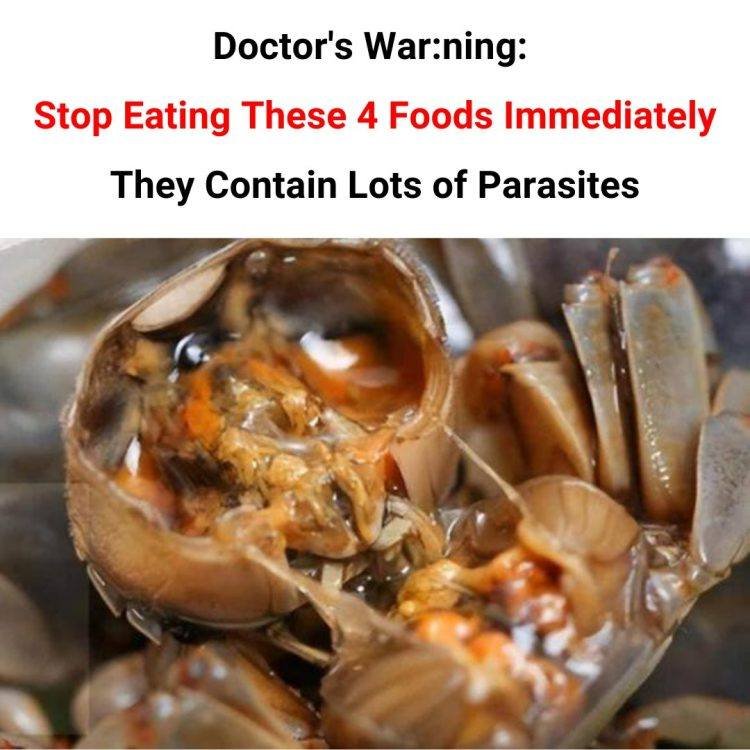
What’s True and What’s Misleading About the Claim
Is This Warning Real?
There are foods that can carry parasites if they are raw, undercooked, or contaminated, but there is no official medical advisory telling people to stop eating four specific foods immediately because they all inherently contain a lot of parasites. Articles circulating online like this mix general food‑safety advice with sensational language that can be misleading.
Scientists and food safety experts do recognize that certain foods are higher risk for parasite contamination, which is why proper handling and cooking is important—but that is very different from the extreme sounding viral claim.
Foods That Can Carry Parasites (When Not Properly Prepared)
According to reputable food safety research, these food groups are known to sometimes harbor parasites if handled or cooked improperly:
1. Undercooked or Raw Meats
Parasites like tapeworms, Trichinella, and protozoa can be present in undercooked pork, beef, or game meat.
2. Raw Fish and Shellfish
Certain fish (especially freshwater fish) and shellfish can carry parasites such as Anisakis and fish tapeworms. This is why sushi chefs freeze fish to kill parasites before serving.
3. Raw Fruits and Vegetables
Produce can carry parasite eggs or cysts if it is irrigated with contaminated water or not washed properly. These include protozoa like Cyclospora and Giardia.
4. Untreated Water and Unpasteurized Dairy
While not always included in clickbait food lists, untreated water and unpasteurized milk can be sources of parasite infections like Cryptosporidium and Giardia.
Important Clarifications
This Is About Risk, Not Guaranteed Contamination
Just because a type of food can carry parasites does not mean it “contains a lot of parasites” all the time. Parasites are microscopic organisms and contamination depends on where the food comes from and how it’s handled—not simply what type of food it is.
Thorough Cooking and Washing Prevent Most Parasites
Proper food safety practices—like cooking meat and fish to safe internal temperatures, washing produce under running water, and avoiding unpasteurized dairy—greatly reduce the risk of parasitic infection.
Bottom Line
- There are foods associated with parasite transmission if they are raw, undercooked, or contaminated.
- Viral “urgent warnings” claiming doctors say to stop eating certain foods immediately because of parasites are exaggerated and not backed by major health organizations.
- Practicing good kitchen hygiene and proper cooking dramatically lowers the risk of ingesting parasites.
If you’d like, I can provide practical food safety tips that reduce the risk of parasites when handling and preparing high‑risk foods. Would you like that?