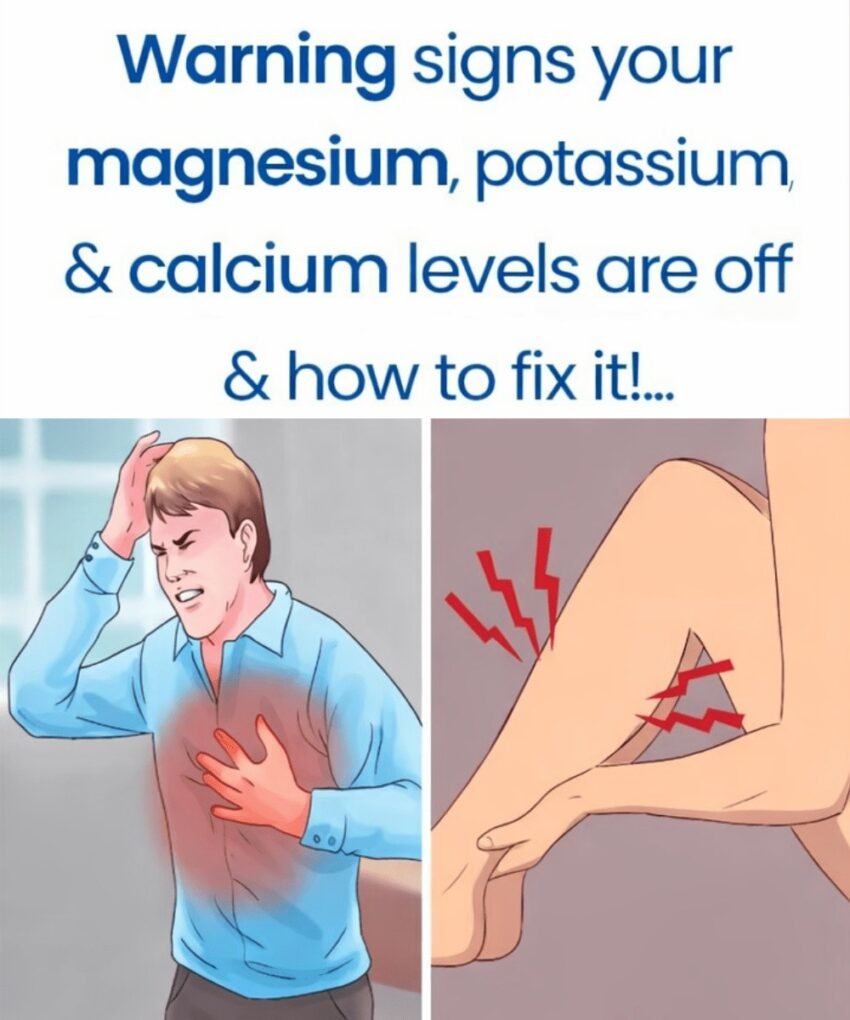
Here’s a complete, structured guide on warning signs of imbalances in magnesium, potassium, and calcium, along with practical ways to fix them:
Warning Signs Your Magnesium, Potassium, and Calcium Levels Are Off — And How to Fix It
Electrolytes like magnesium, potassium, and calcium are essential for muscle function, nerve signaling, bone health, and heart rhythm. Imbalances can lead to noticeable symptoms and long-term health issues.
1. Magnesium Deficiency
Warning Signs
- Muscle cramps or spasms
- Fatigue or low energy
- Irritability or anxiety
- Nausea or loss of appetite
- Abnormal heart rhythms
How to Fix It
- Dietary Sources: Spinach, pumpkin seeds, almonds, black beans, avocado
- Supplements: Magnesium citrate or glycinate (consult a doctor for dosage)
- Lifestyle: Reduce excessive alcohol and caffeine, which deplete magnesium
2. Potassium Deficiency
Warning Signs
- Weakness or fatigue
- Muscle cramps or twitching
- Irregular heartbeat or palpitations
- Constipation
- Tingling or numbness
How to Fix It
- Dietary Sources: Bananas, oranges, sweet potatoes, spinach, beans
- Supplements: Only under medical supervision, especially if taking heart medications
- Hydration: Maintain adequate water intake; dehydration can worsen potassium loss
3. Calcium Deficiency
Warning Signs
- Muscle cramps and spasms
- Numbness or tingling in fingers
- Brittle nails or hair loss
- Weak or brittle bones (osteoporosis)
- Tooth decay or gum issues
How to Fix It
- Dietary Sources: Dairy products, fortified plant-based milk, tofu, almonds, leafy greens
- Supplements: Calcium carbonate or citrate if diet is insufficient (take with vitamin D for absorption)
- Lifestyle: Weight-bearing exercises help strengthen bones
General Tips to Maintain Electrolyte Balance
- Balanced Diet: Include a variety of vegetables, fruits, nuts, seeds, dairy, and legumes.
- Stay Hydrated: Water is essential for proper electrolyte function.
- Regular Exercise: Supports circulation, muscle function, and bone health.
- Check Medications: Diuretics and certain heart medications can affect electrolyte levels.
- Periodic Testing: Blood tests can help monitor levels, especially if symptoms appear.
⚠️ When to See a Doctor
- Severe muscle spasms, persistent fatigue, or heart palpitations
- Signs of bone weakness or frequent fractures
- Numbness, tingling, or neurological symptoms
Electrolyte imbalances can be subtle but serious if ignored. Correcting them early through diet, lifestyle, and proper supplementation can prevent long-term complications.
If you want, I can create a 7-day meal and supplement plan specifically designed to balance magnesium, potassium, and calcium naturally, with recipes and tips for easy absorption.
Do you want me to make that plan?