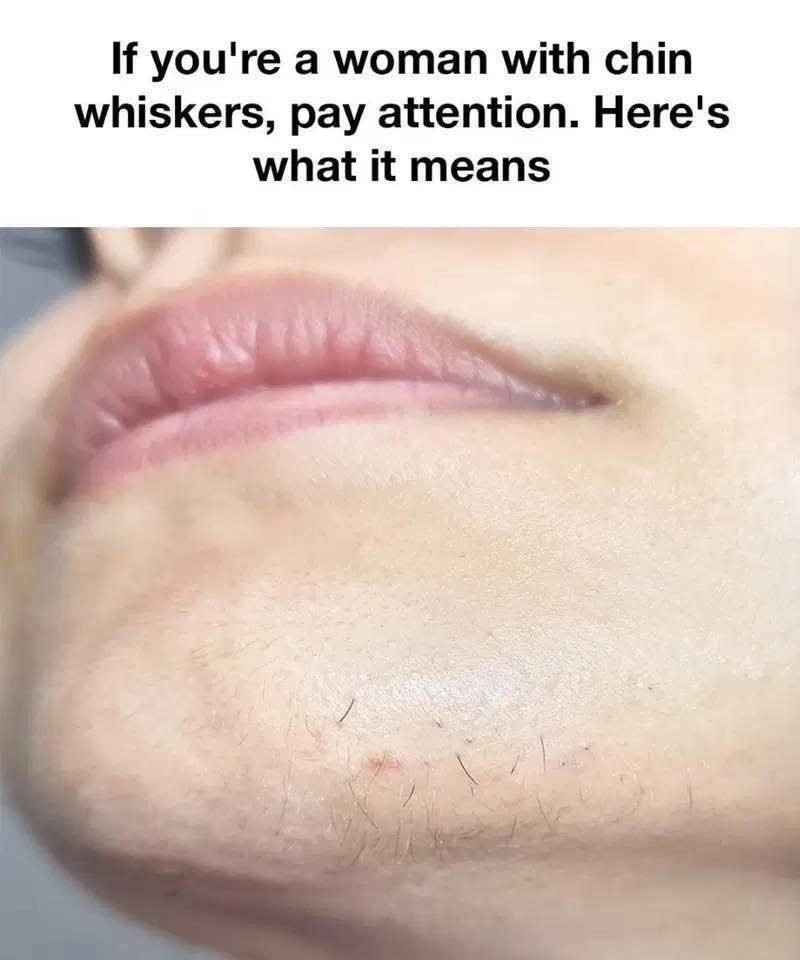
1. Hormonal Changes
Women naturally produce small amounts of androgens (male hormones). If these increase slightly, they can stimulate thicker facial hair. This can happen:
-
During puberty
-
After pregnancy
-
Around menopause
2. Polycystic Ovary Syndrome (PCOS)
One common medical reason is Polycystic Ovary Syndrome (PCOS).
Women with PCOS may experience:
-
Chin or facial hair growth
-
Irregular periods
-
Acne
-
Weight gain
-
Difficulty getting pregnant
This happens because the ovaries produce higher levels of androgens.
3. Genetics
Some women simply inherit thicker facial hair. This is more common in certain ethnic backgrounds and can occur even when hormones are normal.
4. Aging
As estrogen levels drop with age, the relative effect of androgens can increase, causing new chin hairs or thicker whiskers.
5. Certain Medications or Conditions
Some medicines or hormonal conditions may lead to Hirsutism, which is excessive hair growth in women in typically male-pattern areas.
When to See a Doctor
Consider medical advice if:
-
Hair growth is sudden or rapidly increasing
-
It’s accompanied by irregular periods, severe acne, or hair thinning
-
You suspect a hormonal disorder
Doctors may check hormones or screen for conditions like PCOS.
Management Options
Common ways to manage chin hair include:
-
Tweezing or threading
-
Waxing or shaving
-
Laser hair removal
-
Prescription treatments for hirsutism
✅ Key point: A few chin hairs are very common and usually harmless, but significant growth can sometimes reflect hormonal imbalance.
If you want, I can also explain the early warning signs of PCOS many women ignore or natural ways to reduce hormonal facial hair. 🌿