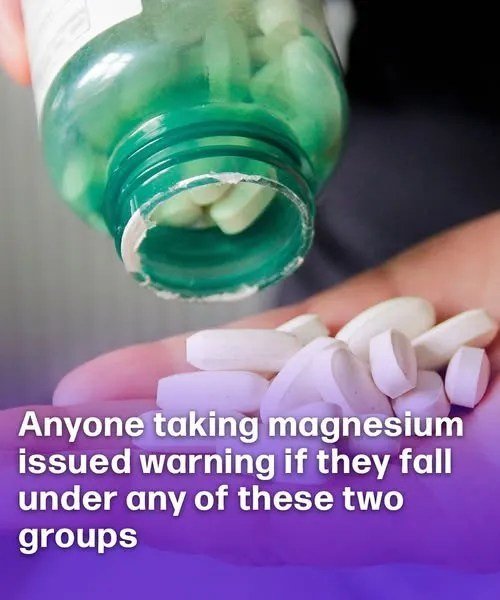
🩺 Why Experts Say Watch Out for Magnesium Supplements
Magnesium is essential for nerve, muscle, and heart function, and many people take it for cramps, sleep, or metabolism. However, supplemental magnesium can pose risks — especially in certain high‑risk groups.
⚠️ 1. People with Kidney Problems
-
Major concern: Kidneys normally filter excess magnesium from the blood.
-
If kidney function is reduced (e.g., chronic kidney disease), magnesium can build up to dangerous levels (hypermagnesemia).
This can cause weakness, low blood pressure, irregular heartbeat, trouble breathing, and even coma in severe cases.
👉 Bottom line: People with kidney impairment should not take magnesium supplements without close medical supervision.
⚠️ 2. Older Adults
-
Age‑related decline in kidney function — even if not diagnosed — raises the risk of magnesium accumulation.
-
Older adults often take multiple supplements or medications that can compound risks.
👉 Tip: Seniors should consult a healthcare provider before starting magnesium, especially at higher doses.
🛑 3. People with Certain Heart or Muscle Conditions
-
Heart block / arrhythmias: High magnesium can slow electrical conduction in the heart.
-
Myasthenia gravis: Magnesium may worsen muscle weakness by affecting nerve‑to‑muscle signals.
👉 These individuals should take magnesium only under medical guidance.
💊 4. Medication Interactions
Magnesium can interfere with absorption or effectiveness of several medications:
-
Antibiotics (e.g., quinolones, tetracyclines) — reduce absorption if taken together.
-
Diuretics and blood pressure meds — can change magnesium balance.
-
Bisphosphonates (bone meds) — less effective if taken with magnesium.
👉 Best practice: Space magnesium supplements away from certain meds and check with a doctor.
🍽 5. Other Groups Who Should Be Cautious
-
Pregnant and breastfeeding women — safe at dietary levels, but high doses should be supervised.
-
People with GI disorders (Crohn’s, celiac) — poor magnesium absorption and higher side effects.
-
Individuals with electrolyte imbalances or low blood pressure — magnesium may worsen symptoms.
🧠 Common Side Effects at High Doses
Even in healthy people, too much magnesium — especially above about 350 mg/day from supplements — may cause:
-
Diarrhea, nausea, cramps
-
Abdominal distress
-
Dizziness or low blood pressure
-
In rare, severe cases: toxicity marked by irregular heartbeat or confusion
🧠 Expert Takeaway
✔ Magnesium from food sources (leafy greens, nuts, seeds) is generally safe.
✔ Supplements have benefits for deficiency but should be used only when needed and ideally under medical guidance, especially for the high‑risk groups above.
If you want, I can explain optimal magnesium forms and doses for specific goals (like sleep vs cramps) and how to take them safely with medications. Let me know!