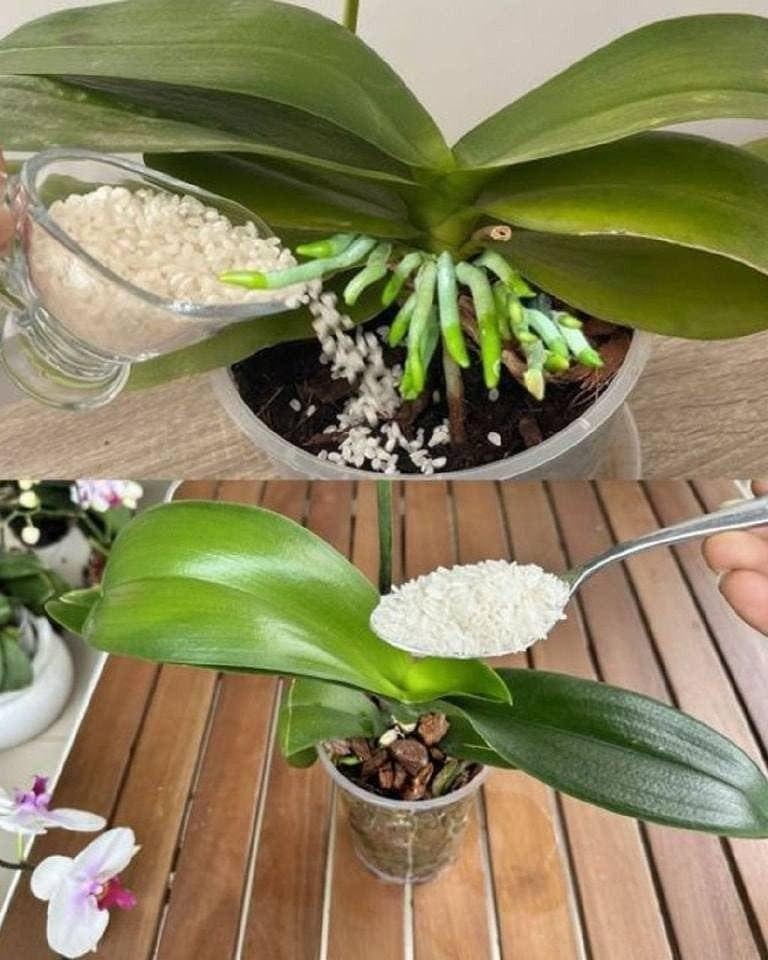
1. Choose the Right Fertilizer
-
Use a balanced orchid fertilizer labeled for blooming, usually 20-20-20 or 30-10-10 depending on growth stage.
-
For flowering orchids, a fertilizer higher in phosphorus (middle number) promotes more blooms (e.g., 10-30-20).
2. Fertilize Correctly
-
Dilute the fertilizer: Orchids are sensitive; use ¼ to ½ the recommended strength on the label.
-
Frequency:
-
During active growth (spring/summer): every 1–2 weeks.
-
During flowering or dormant periods (fall/winter): every 3–4 weeks.
-
3. Water Before Fertilizing
-
Water your orchid first, then apply fertilizer.
-
Avoid applying fertilizer on dry roots—it can burn them.
4. Flush Occasionally
-
Once a month, flush with plain water to prevent salt buildup from fertilizers.
-
Salt buildup can damage roots and reduce blooms.
5. Combine with Proper Care
-
Light: Bright, indirect sunlight encourages flowering.
-
Humidity: 50–70% humidity is ideal.
-
Temperature: Keep nights slightly cooler than daytime; many orchids need this drop to trigger blooms.
-
Pruning: Remove spent flowers and dead roots to direct energy to new growth.
💡 Pro Tip: Many orchid enthusiasts follow the “weakly, weekly” rule—fertilize lightly every week instead of heavily once a month. This keeps nutrients steady without overwhelming the plant.
If you want, I can make a simple month-by-month fertilization schedule specifically for phalaenopsis or moth orchids, so you know exactly when and how to feed for maximum blooms.
Do you want me to do that?