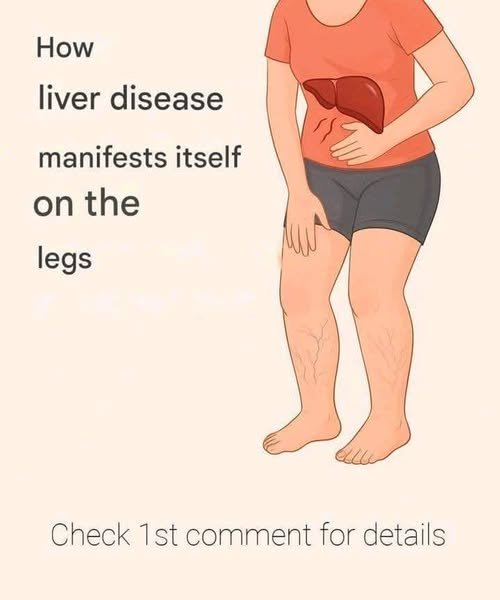
Your Legs Are Screaming “Help!”: 5 Possible Warning Signs Linked to Liver Problems
Introduction
The liver is one of the most important organs in the body. It filters toxins, processes nutrients, produces bile for digestion, and helps regulate metabolism. When the liver becomes damaged or diseased, symptoms can appear in many parts of the body—including the legs.
Conditions such as Liver Disease or Cirrhosis can sometimes cause noticeable changes in the lower body. Recognizing these signs early may help people seek medical care sooner.
1. Swelling in the Legs and Ankles
One of the most common signs of liver problems is swelling in the legs, ankles, or feet.
When the liver is damaged, it may produce less albumin (a protein that helps keep fluid in the bloodstream). Low albumin levels can cause fluid to leak into surrounding tissues, leading to swelling known as edema.
Possible signs include:
- Puffy ankles or feet
- Tight or shiny skin on the legs
- Swelling that worsens during the day
2. Severe Itching on the Legs
Persistent itching, especially on the legs, can sometimes be linked to liver conditions.
In diseases such as Cholestasis, bile salts may accumulate in the bloodstream. This buildup can irritate nerve endings in the skin and cause intense itching.
Symptoms may include:
- Itchy skin without a rash
- Worse itching at night
- Scratching that leads to skin irritation
3. Dark or Spider-Like Veins
Changes in blood circulation caused by liver dysfunction may lead to visible veins on the skin.
These small, web-like blood vessels are called spider angiomas. They can appear on the legs, chest, or face and may be associated with liver conditions such as cirrhosis.
4. Easy Bruising on the Legs
Frequent bruising on the legs can sometimes indicate liver trouble.
The liver produces proteins necessary for blood clotting. When liver function declines, the body may have difficulty forming clots, which can cause bruises to appear more easily—even after minor bumps.
5. Muscle Weakness or Cramps
People with advanced liver disease may experience muscle cramps or weakness in their legs. This can be related to:
- Electrolyte imbalances
- Poor nutrient metabolism
- Changes in muscle function due to chronic illness
Nighttime leg cramps are particularly common in some liver conditions.
When to Seek Medical Advice
If leg symptoms occur along with other signs such as:
- Yellowing of the skin or eyes (Jaundice)
- Persistent fatigue
- Abdominal swelling
- Dark urine or pale stools
it is important to consult a healthcare professional for evaluation.
Conclusion
Your legs can sometimes reflect what is happening inside your body. Swelling, itching, unusual veins, bruising, or muscle cramps may occasionally be linked to liver problems. While these symptoms do not always mean liver disease, persistent or worsening changes should be evaluated by a medical professional.