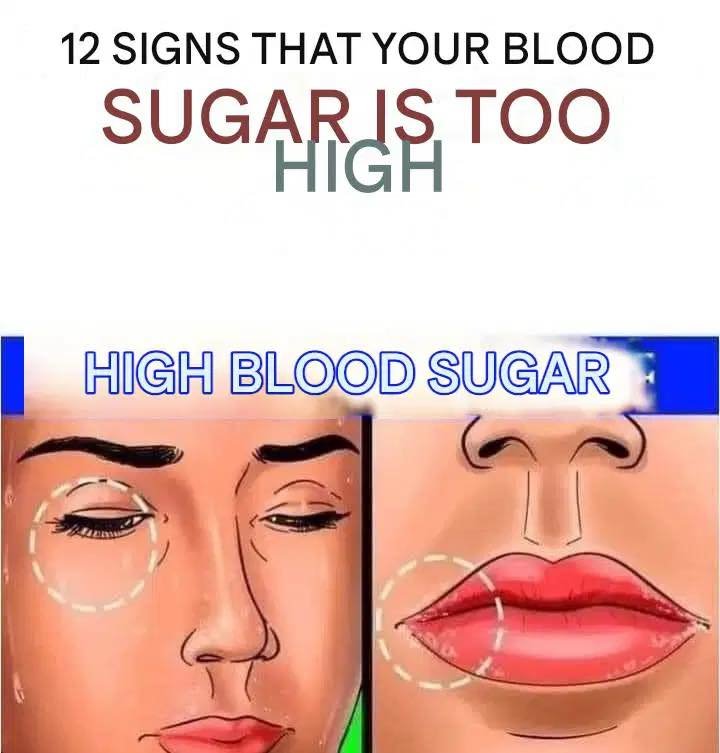
🚨 The High-Sugar Alert: 12 Key Symptoms Your Body May Be Showing You
High blood sugar (hyperglycemia) can develop gradually — and many people ignore early warning signs. Recognizing symptoms early can help prevent long-term complications, especially if you’re at risk for prediabetes or type 2 diabetes.
Here are 12 important signs your body may be sending:
1️⃣ Frequent Urination (Especially at Night)
When blood sugar rises, your kidneys work overtime to remove excess glucose — leading to more bathroom trips.
2️⃣ Excessive Thirst
Losing fluids through frequent urination makes you feel constantly thirsty.
3️⃣ Increased Hunger
Even after eating, your cells may not be getting enough glucose for energy, triggering ongoing hunger.
4️⃣ Fatigue
High sugar levels interfere with how your body uses insulin, leaving you feeling drained or sluggish.
5️⃣ Blurry Vision
Extra glucose can cause swelling in the eye lenses, temporarily affecting focus.
6️⃣ Slow-Healing Cuts or Wounds
High blood sugar affects circulation and immune response, delaying healing.
7️⃣ Frequent Infections
Recurring yeast infections, urinary tract infections, or skin infections can be linked to elevated glucose.
8️⃣ Tingling or Numbness in Hands and Feet
Persistently high blood sugar can damage nerves (diabetic neuropathy).
9️⃣ Dry Mouth
Dehydration from frequent urination can lead to persistent dry mouth.
🔟 Unexplained Weight Loss
If glucose can’t enter cells properly, the body starts breaking down fat and muscle for energy.
1️⃣1️⃣ Darkened Skin Patches
Velvety dark areas (often on the neck, armpits, or groin) may signal insulin resistance.
1️⃣2️⃣ Headaches or Difficulty Concentrating
Fluctuating blood sugar levels can affect brain function and mental clarity.
⚠️ When to Seek Medical Care
Seek urgent medical attention if you experience:
-
Severe weakness
-
Fruity-smelling breath
-
Rapid breathing
-
Confusion
-
Persistent vomiting
These could signal a serious condition like diabetic ketoacidosis.
Who Is at Higher Risk?
You may be at greater risk if you:
-
Are overweight or inactive
-
Have a family history of diabetes
-
Have high blood pressure
-
Have polycystic ovary syndrome (PCOS)
-
Are over age 45
What You Can Do
-
Reduce added sugars and refined carbs
-
Increase fiber intake
-
Exercise regularly
-
Stay hydrated
-
Get regular blood glucose testing
Early detection makes a huge difference.
If you’d like, I can also explain:
-
The difference between high and low blood sugar
-
Early prediabetes signs
-
A simple 7-day blood sugar reset plan
-
Best foods for stabilizing glucose levels