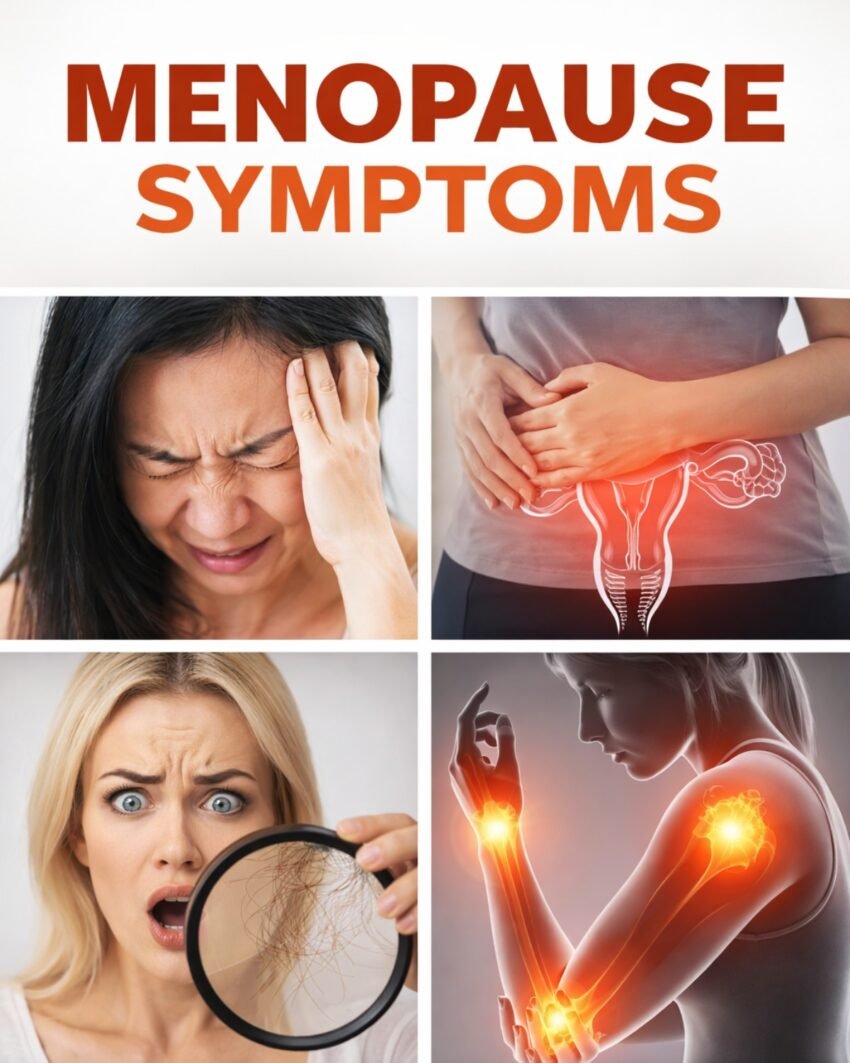
Early Menopause: 10 Signs (and More) to Watch Out For
Early menopause happens when menopause occurs before age 45. If it happens before 40, it’s called premature menopause or primary ovarian insufficiency (POI). The average age of menopause is 51.
It can happen naturally or due to medical treatments such as surgery, chemotherapy, or certain autoimmune conditions.
Here are the key signs to watch for:
1. Irregular Periods
Often the first sign. Cycles may become:
- Shorter or longer
- Heavier or lighter
- Skipped altogether
2. Hot Flashes
Sudden waves of heat, usually in the upper body and face.
They may last seconds to minutes and can happen multiple times a day.
3. Night Sweats
Hot flashes that occur during sleep, often disrupting rest.
4. Mood Changes
- Irritability
- Anxiety
- Low mood or depression
Hormonal shifts (especially declining estrogen) can affect brain chemistry.
5. Sleep Problems
Difficulty falling asleep or staying asleep—even without night sweats.
6. Vaginal Dryness
Lower estrogen can thin vaginal tissue, causing:
- Dryness
- Discomfort during intimacy
- Increased risk of infections
7. Lower Libido
A decrease in sexual desire is common due to hormonal and emotional changes.
8. Brain Fog
Trouble concentrating, forgetfulness, or feeling mentally “slower.”
9. Weight Changes
Metabolism may slow, leading to increased belly fat even without major lifestyle changes.
10. Hair & Skin Changes
- Thinning hair
- Dry skin
- Brittle nails
Additional Symptoms
- Joint aches
- Headaches
- Heart palpitations
- Breast tenderness
- Urinary urgency
- Decreased fertility
Common Causes of Early Menopause
- Family history
- Autoimmune disorders
- Smoking
- Surgical removal of ovaries (oophorectomy)
- Cancer treatments (chemotherapy or radiation)
- Genetic conditions such as Turner syndrome
When to See a Doctor
Talk to a healthcare provider if:
- You’re under 45 and having persistent irregular periods
- You’ve missed 3+ consecutive periods
- You’re experiencing severe symptoms
- You want to discuss fertility options
Blood tests measuring FSH (follicle-stimulating hormone) and estrogen levels can help confirm diagnosis.
Why Early Diagnosis Matters
Early menopause increases long-term risk of:
- Osteoporosis
- Heart disease
- Cognitive decline
Treatment options may include:
- Hormone therapy (HT)
- Lifestyle adjustments
- Calcium & vitamin D support
- Bone density monitoring
If you’d like, I can also share natural strategies to manage symptoms or a checklist to help you track possible early menopause signs.