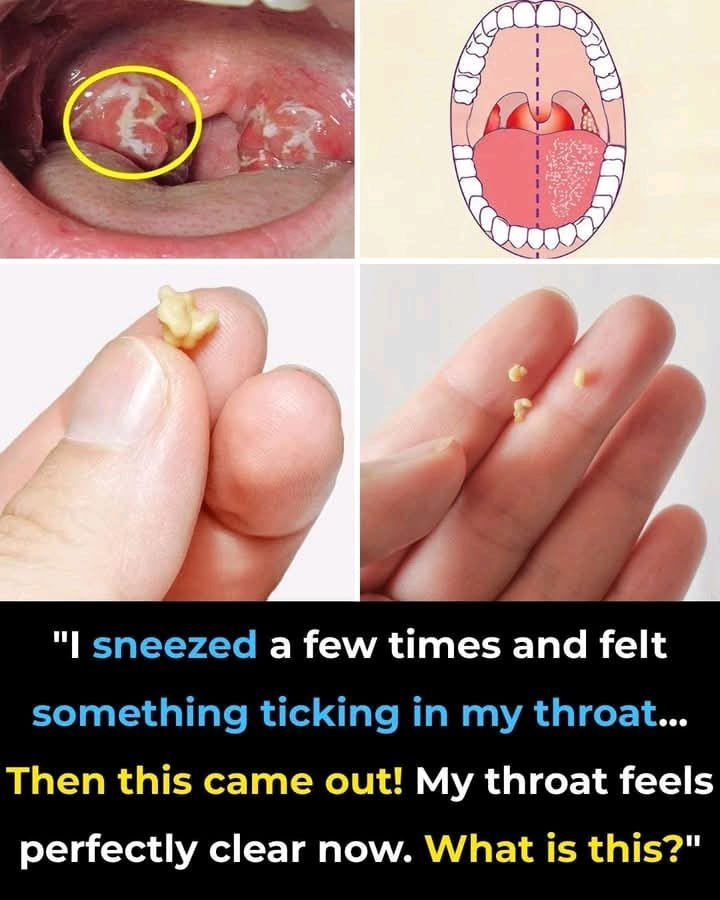
Here’s What You Need to Know About Tonsil Stones
Tonsil stones (also called Tonsillolith) are small, white or yellowish lumps that form in the crevices of your tonsils. They’re common, usually harmless, and often more annoying than dangerous.
🧠 What Causes Them?
Your tonsils have tiny pockets (crypts). Food particles, dead cells, mucus, and bacteria can get trapped inside. Over time, this debris hardens and calcifies — forming a stone.
They’re more common if you:
-
Have large tonsils
-
Get frequent throat infections
-
Have chronic sinus drainage
-
Struggle with post-nasal drip
😷 Common Symptoms
Some people don’t notice them at all. Others may experience:
-
Persistent bad breath (most common sign)
-
Feeling like something is stuck in the throat
-
Mild throat irritation
-
Ear discomfort (referred pain)
-
Visible white/yellow spots on tonsils
Severe pain or high fever is uncommon and may suggest infection instead.
🦠 Why Do They Smell So Bad?
Bacteria in the trapped debris produce sulfur compounds — the same type responsible for bad breath. When the stone is dislodged, the odor can be strong.
🏠 Can You Remove Them at Home?
If small and visible, some people gently remove them by:
-
Gargling warm salt water
-
Using a low-pressure water flosser (carefully)
-
Gently pressing with a cotton swab
⚠️ Avoid sharp objects — they can cause bleeding or infection.
🩺 When to See a Doctor
Seek medical advice if you have:
-
Frequent or very large stones
-
Recurrent infections
-
Significant pain
-
Difficulty swallowing
In rare chronic cases, a doctor may discuss procedures like Tonsillectomy (removal of the tonsils), but this is usually a last resort.
🪥 How to Prevent Tonsil Stones
-
Brush teeth and tongue twice daily
-
Floss regularly
-
Use non-alcohol mouthwash
-
Stay hydrated
-
Manage sinus or allergy issues
✅ Bottom Line
Tonsil stones are common and usually harmless — but they can cause bad breath and discomfort. Good oral hygiene and gentle care usually keep them under control.
If you’d like, I can also explain:
-
The difference between tonsil stones and strep throat
-
Whether they’re contagious
-
Or natural ways to reduce recurrence