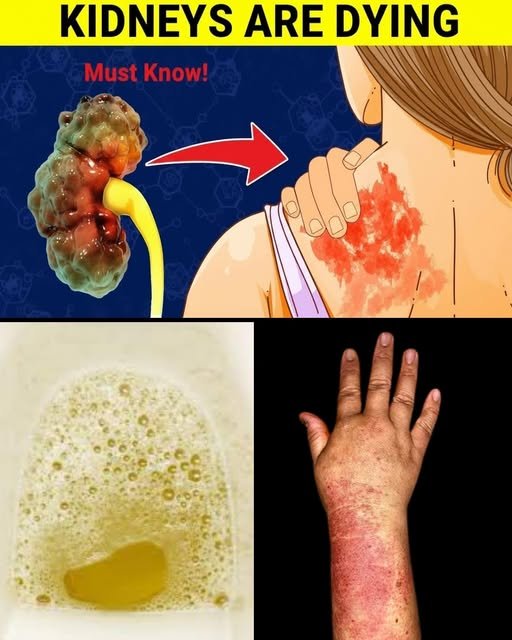
That kind of headline is designed to scare people into clicking. Let’s slow it down and talk about real, medically recognized warning signs of kidney problems and the tests that actually matter, without the drama.
First—important context
Kidney disease is often silent in early stages. Many people feel fine until function is significantly reduced. Symptoms usually appear late, not early.
Real warning signs of declining kidney function
These don’t automatically mean “kidney failure,” but they do warrant medical evaluation:
- Changes in urination
- Foamy or bubbly urine (can signal protein loss)
- Urinating more at night
- Very dark or very pale urine
- Blood in urine
- Swelling (edema)
- Feet, ankles, legs, hands, or around the eyes
- Happens because kidneys aren’t removing excess fluid
- Persistent fatigue and weakness
- From toxin buildup or anemia caused by reduced kidney hormone production
- Shortness of breath
- Fluid buildup in lungs or anemia
- Loss of appetite, nausea, metallic taste
- Waste products accumulating in the blood
- Persistent itching
- Mineral imbalance (especially phosphorus)
- Muscle cramps
- Electrolyte imbalances (calcium, potassium)
- High blood pressure that’s hard to control
- Both a cause and a result of kidney disease
- Brain fog or difficulty concentrating
- Advanced toxin buildup
Again: many people with early kidney disease have none of these.
Tests that actually detect kidney disease early
These are the tests doctors use to assess kidney health and prevent progression to dialysis:
- Blood creatinine + eGFR
- Estimates kidney filtering ability
- Most important screening test
- Urine albumin-to-creatinine ratio (ACR)
- Detects protein leakage
- Often the earliest sign of damage
- Urinalysis
- Looks for blood, protein, and abnormalities
- Blood pressure monitoring
- Chronic high BP damages kidneys silently
- Blood tests for electrolytes
- Potassium, sodium, calcium, phosphorus
- Imaging (ultrasound)
- Checks kidney size, structure, blockages (used when needed)
What actually helps avoid dialysis (evidence-based)
There is no herb, tea, or detox that replaces this:
- Tight blood pressure control
- Blood sugar control (if diabetic)
- Reducing excess salt
- Avoiding NSAID overuse (ibuprofen, naproxen)
- Treating protein in urine early
- Seeing a doctor before symptoms appear
Many people with kidney disease never need dialysis when it’s caught early and managed properly.
Big red flag about viral videos
If a video claims:
- “Reverse kidney failure naturally”
- “One drink cleans kidneys”
- “Doctors won’t tell you this”
- “Avoid dialysis with this leaf/tea”
That’s misinformation. Dialysis is avoided through medical monitoring and risk control, not secret remedies.
If you want, I can:
- Explain what eGFR numbers actually mean
- Tell you when kidney damage is reversible vs permanent
- Help you interpret lab results
- Break down kidney myths you’ve seen online
Just tell me what angle you want.