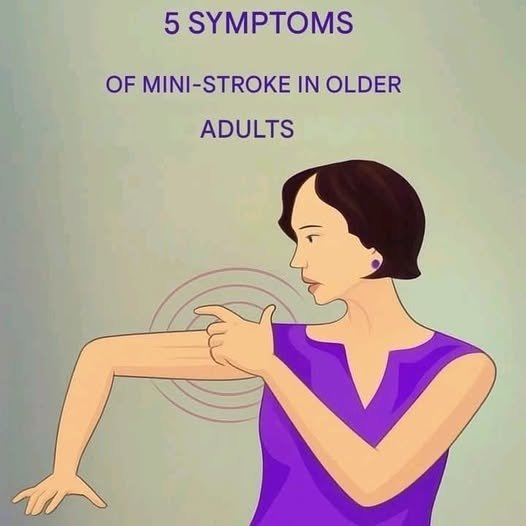
5 Symptoms of a Mini Stroke in Seniors That Shouldn’t Be Ignored
A mini stroke, medically known as a transient ischemic attack (TIA), occurs when blood flow to part of the brain is temporarily blocked. Unlike a major stroke, symptoms may last only a few minutes to hours and then disappear. However, a TIA is a serious warning sign. It significantly increases the risk of a full stroke, especially within the following days or weeks.
Recognizing the symptoms early can save a life.
1. Sudden Weakness or Numbness on One Side of the Body
One of the most common signs of a mini stroke is sudden weakness or numbness, particularly on one side of the body. This may affect:
-
The face
-
An arm
-
A leg
The person may notice their face drooping, difficulty lifting one arm, or a tingling sensation that appears suddenly.
2. Difficulty Speaking or Slurred Speech
Speech problems are a key warning sign. A senior experiencing a TIA may:
-
Slur words
-
Struggle to find the right words
-
Have trouble understanding others
-
Speak in a confused or jumbled manner
Even if speech returns to normal quickly, this symptom should never be ignored.
3. Sudden Vision Problems
Temporary vision changes can signal a mini stroke. These may include:
-
Blurred vision
-
Double vision
-
Sudden loss of vision in one or both eyes
Some people describe it as a curtain briefly falling over their vision.
4. Sudden Dizziness or Loss of Balance
A mini stroke can affect coordination and balance. Warning signs include:
-
Sudden dizziness
-
Difficulty walking
-
Loss of coordination
-
Unexplained falls
These symptoms may appear without warning and can be mistaken for normal aging, which makes them especially dangerous.
5. Sudden Severe Headache
Although more common in certain types of strokes, a sudden, intense headache with no known cause can be a warning sign. If it occurs along with other symptoms, immediate medical attention is critical.
Why Immediate Action Is Critical
Even if symptoms disappear within minutes, a TIA is a medical emergency. Up to one in three people who experience a mini stroke will later have a full stroke, often within a short time frame.
Use the FAST method to remember key warning signs:
-
F – Face drooping
-
A – Arm weakness
-
S – Speech difficulty
-
T – Time to call emergency services
Do not wait for symptoms to improve. Immediate medical evaluation can reduce the risk of a major stroke.
Conclusion
A mini stroke in seniors may last only a short time, but it is a serious warning sign that should never be ignored. Sudden weakness, speech problems, vision changes, dizziness, or severe headache require urgent medical attention. Early recognition and treatment can prevent life-threatening complications and protect long-term brain health.
If you would like this rewritten in a more simplified, caregiver-focused, or SEO-optimized format, I can tailor it for your audience.