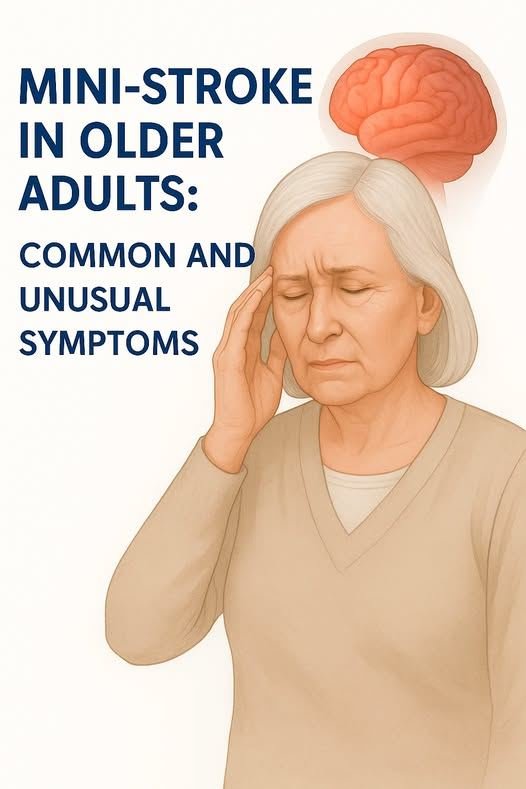
5 Critical Health Signals of a Mini Stroke in Seniors That Shouldn’t Be Ignored
A mini stroke, or Transient Ischemic Attack, occurs when blood flow to part of the brain is temporarily blocked. Although symptoms may last only a few minutes to a few hours, TIAs are serious warning signs that a major stroke could follow. Seniors should recognize these signals early and seek immediate medical attention.
1. Sudden Weakness or Numbness
-
Typically affects one side of the body (arm, leg, or face).
-
May feel like sudden heaviness or tingling.
-
Even brief episodes should never be ignored.
2. Trouble Speaking or Understanding Speech
-
Difficulty forming words or slurred speech (dysarthria).
-
Confusion or inability to comprehend simple sentences.
-
Can appear suddenly and resolve quickly, making it easy to dismiss.
3. Sudden Vision Changes
-
Blurred, double, or partial loss of vision in one or both eyes.
-
Can affect depth perception, making tasks like walking or reading dangerous.
4. Balance or Coordination Problems
-
Sudden dizziness, unsteadiness, or trouble walking.
-
Difficulty performing tasks that require hand-eye coordination.
-
Often mistaken for fatigue or normal aging.
5. Sudden Severe Headache
-
A sharp or intense headache with no clear cause.
-
Sometimes described as the “worst headache” experienced.
-
Can occur alongside other symptoms like dizziness or nausea.
Important Notes for Seniors
-
TIAs are often precursors to full strokes, especially in people over 60.
-
Risk factors include high blood pressure, diabetes, heart disease, smoking, and high cholesterol.
-
Immediate evaluation with a doctor or emergency services is critical, even if symptoms resolve quickly.
Prevention and Monitoring
-
Maintain healthy blood pressure and blood sugar.
-
Follow a balanced diet and stay physically active.
-
Avoid smoking and excessive alcohol.
-
Regular medical check-ups help detect underlying risk factors.
Recognizing these subtle warning signs can save lives and reduce the risk of permanent brain damage.