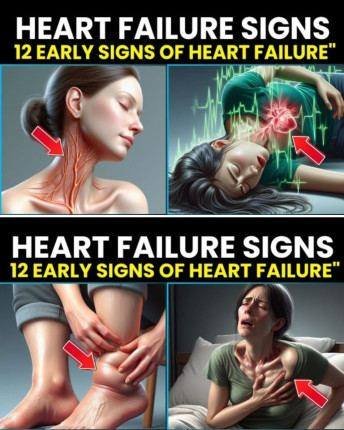
1. Shortness of Breath (Dyspnea)
Feeling breathless during normal activities — or even while lying down — is one of the most common early symptoms. You may notice you need extra pillows to sleep comfortably.
2. Persistent Fatigue
Unusual tiredness during everyday tasks (like walking, climbing stairs, or carrying groceries) can signal reduced blood flow from the heart.
3. Swelling in Legs, Ankles, or Feet
Fluid buildup (edema) often causes noticeable swelling in the lower extremities. Shoes or socks may suddenly feel tight.
4. Rapid or Irregular Heartbeat
A racing, fluttering, or pounding heartbeat may occur as the heart tries to compensate for reduced pumping ability.
5. Persistent Cough or Wheezing
A chronic cough, especially one producing white or pink-tinged mucus, can indicate fluid buildup in the lungs.
6. Sudden Weight Gain
Gaining 2–3 pounds (1–1.5 kg) in a day or 5 pounds in a week may signal fluid retention.
7. Reduced Ability to Exercise
If activities you previously handled easily now leave you exhausted or breathless, it could be an early warning.
8. Loss of Appetite or Nausea
Fluid buildup around the liver and digestive system may cause a feeling of fullness, bloating, or nausea.
9. Difficulty Concentrating or Confusion
Reduced blood flow to the brain can cause memory issues or trouble focusing.
10. Increased Need to Urinate at Night
Waking frequently to urinate (nocturia) may occur because fluid shifts when lying down.
11. Chest Pain (If Heart Failure Is Caused by a Heart Attack)
If heart failure develops after a heart attack, chest pressure or pain may be present. This requires immediate medical attention.
🚨 When to Seek Immediate Help
Call emergency services right away if you experience:
-
Severe shortness of breath
-
Fainting
-
Chest pain spreading to the arm, neck, or jaw
-
Pink, frothy mucus with coughing
Important Note
Heart failure symptoms can develop slowly and may be mistaken for aging or lack of fitness. If you notice several of these signs, consult a healthcare professional promptly. Early treatment can slow progression and improve quality of life.
If you’d like, I can also explain risk factors or prevention strategies.